

A Data-Driven Investigative Report
Rita Emmanuel Matti
The women doctors who gave up their dream of surgery did not always do so because they no longer wanted it, but because the path to it was not sufficiently accessible.
From the time she was a primary-school child, Lubna knew where she wanted to go. It was not a passing whim, but a dream born of real pain. A teacher she loved began to develop trembling hands in front of her pupils. Parkinson’s disease gradually robbed the teacher of her movement until she died. The tremor that no one could stop etched a question into the child’s mind: what if someone could do something?
That question became a decision. Lubna resolved to become a neurosurgeon, not because the specialty was prestigious, but because she saw it as a way to help patients enduring the same suffering she had watched slowly consume her teacher. She carried the dream for years, entering medical school knowing exactly where she wanted to end up — and which scalpel she wanted to hold.
But today Lubna is not holding a neurosurgeon’s scalpel. Somewhere along the road, between medical-school lecture halls and operating-room doors, the dream she had carried since childhood began to wither slowly — just as her teacher’s hands had once withered before her eyes. Her ability did not fail her, nor did an examination turn her away. Something heavier than exhaustion and harsher than sleepless nights was waiting on that road: something unwritten in regulations and never posted on hospital walls.
Lubna says she found no environment in government institutions that encouraged women doctors to enter surgical specialties. Quite the opposite. “To be honest, at first I was thinking of trying and competing for the specialty. But the closer I came to that path, the more I began to see a different reality. I felt there was enormous pressure within the medical environment, especially on women doctors. Sometimes the competition is not only academic. Some male doctors try to make a woman doctor feel that this is not her place, undermine her confidence, or sometimes obstruct her opportunities to train or prove herself. Frankly, I did not feel there was any body within the institution that stood by women doctors or provided a fair environment. So I began to lose enthusiasm for my dream.”
If Lubna stepped back from her dream before entering the operating room, Dr. Rasha Abdul-Hafiz al-Yuzbaki, a specialist in neurosurgery, entered that room and excelled despite every difficulty and challenge. Yet in the end, she decided to leave behind everything she had achieved after years in the specialty and wait for a transfer to a university teaching post. Her story embodies the other side of what frightened Lubna away from the promise she had made herself as a child.
Rasha says she recorded the highest number of operations in government hospitals in her branch — performance recognized by health authorities in Mosul. Ibn Sina Hospital gave her a letter of appreciation for carrying out 38 operations in June 2020, after having honored her in March for the same reason. Yet she has decided to turn her back on operating rooms altogether and wait for her transfer into academia. “I have made up my mind,” she says firmly. “Once I move to education, I will not return to the hospital, because the hospital has too many problems.”
Nineveh’s neurosurgery service is therefore preparing to lose one of its most productive surgeons — not because her hand failed the scalpel, but because the institution that was supposed to support her made staying harder than leaving.
The fears Lubna described took concrete form in Rasha’s journey. One small but telling episode came when Rasha put up a sign at her clinic stating that she had ranked first in the Arab Board in 2022. Colleagues complained to the syndicate, and she was asked to remove it. She complied — even though, she says, “I did not write anything false. I have an official document proving that I came first.”
This data-driven investigation finds that Lubna and Rasha are not isolated cases. Their experiences point to systematic adverse discrimination affecting women doctors who want to pursue surgery in Nineveh Governorate. The investigation is based on an analysis of a sample of doctors registered at private clinics in the governorate; a survey of 136 women doctors on why women are turning away from surgical specialties; interviews with women doctors and specialist physicians; and statements from officials at the Nineveh Doctors’ Syndicate that acknowledge aspects of the reality while distancing the syndicate from responsibility for it.
The dataset does not include doctors who work only inside hospitals or in unofficial clinics. Some surgical subspecialties were grouped under broader specialties to make the results easier to interpret, and doctors working in more than one area or operating more than one clinic were excluded to avoid double counting, particularly when measuring the numerical gender gap.
This investigation goes beyond figures and survey responses. It also draws on regional studies, board-curriculum documents, official decisions and correspondence, human-rights reports, legal texts, and the testimony of women doctors who wanted to specialize in surgery but found that desire turning into a burden amid challenges that begin in society and are reproduced within the training system and the healthcare environment itself.
Numbers That Reveal the Gap
Data collected from the “Tabib” app in Nineveh — developed by a medical team affiliated with the National Medical Students Club and, according to officials from the Doctors’ Syndicate who spoke to the reporter, listing all officially registered private clinics in the governorate — reveal a clear gap in women’s representation in highly specialized surgical fields.
A total of 992 male and female doctors have private clinics officially registered with the Doctors’ Syndicate. The figure does not include doctors who work only in hospitals or in any medical facility not officially registered with the syndicate.
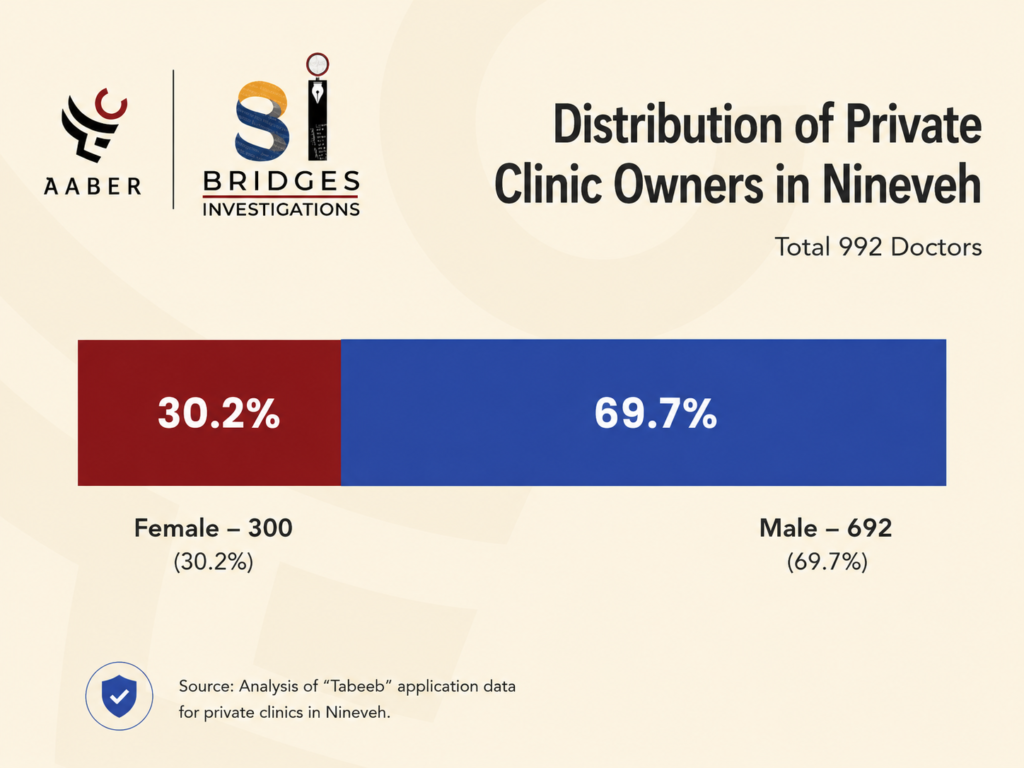
Of this sample, 692 were men, or 69.67%, compared with 300 women, or 30.24%. In other words, there are roughly two male doctors for every woman doctor. The disparity becomes far more pronounced when surgical specialties are considered separately.
Across a range of surgical specialties — including general surgery, pediatric surgery, neurosurgery, cardiac surgery and orthopedic surgery — there were 382 male doctors compared with only 32 women. Men therefore accounted for 92.27% of doctors in these specialties, compared with 7.73% for women: roughly 12 male doctors for every woman doctor.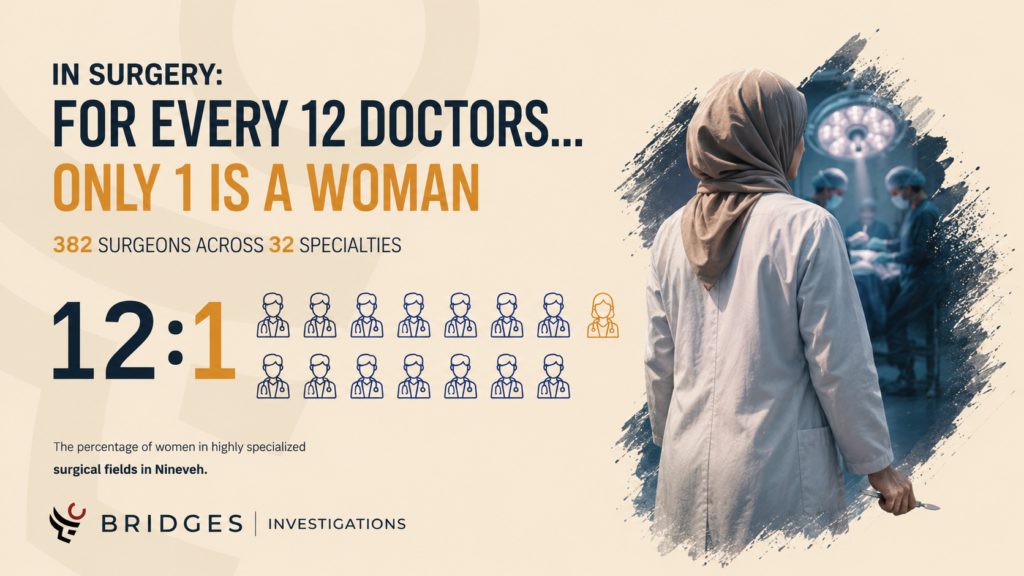
The broader numerical gap can therefore be attributed in large part to these fields. In non-surgical specialties — such as nutrition clinics, pediatrics, dentistry and family medicine — the gender distribution appears much closer to parity. That raises a central question: why is the road to the surgical scalpel so much harder for women in the governorate than for men?
There were 268 women doctors in non-surgical specialties, compared with 310 men. These fields ranged from family medicine, obstetrics and gynecology, and pediatrics to internal medicine, oncology and physiology. Data tracked over several years even showed women forming a majority in some specialties. In family medicine, for example, women accounted for 60.87%, compared with 39.13% for men.
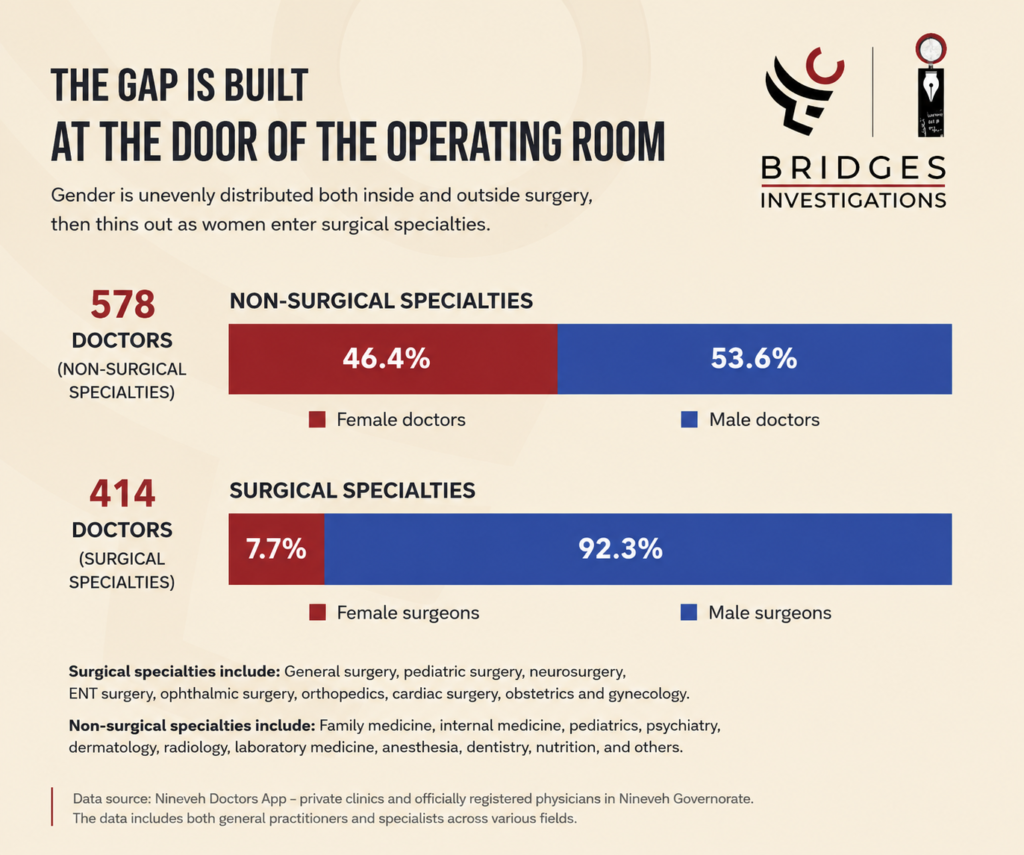
This relative balance outside surgery strengthens the assumption that the problem is not women’s entry into medicine in general. The analysis alone, however, cannot fully explain why the gap is so large specifically in surgery. Lubna’s account sketches a broader picture: it begins with a discouraging environment and extends to the absence of effective protection for surgeons in general against disputes and claims surrounding medical errors. Women can experience this more acutely because they are also confronted with ideas that equate their gender with a lack of competence, according to Lubna and several women doctors interviewed for this investigation.
Lubna says: “If a patient dies, the patient’s relatives sometimes assault, threaten or insult the doctor. In reality, I do not see strict measures protecting medical staff. Government institutions sometimes withdraw from the case and leave the doctor to face the problem alone. That creates fear and insecurity. For me, this was another reason to stay away from surgical specialties: the responsibility is enormous, but institutional protection and support are weak.”
The gender gap in surgery is global. A study published in the European Journal of Surgery covering high-income countries including the United States, Austria, Switzerland, France and Spain found that the growing number of women graduating from medical schools had not translated proportionately into surgical specialties. Women remained underrepresented in operating rooms compared with men — making the question even more pressing in lower-income countries such as Iraq.
The picture also overlaps with the closest regional study to Nineveh’s context. In Lebanon, a country that ranks ahead of Iraq on equality indicators, a 2022 study drawing on data for 15,429 doctors found that women represented 21.8% of all physicians but only 2.3% of surgeons — just 65 women surgeons — the lowest female representation across all medical fields.
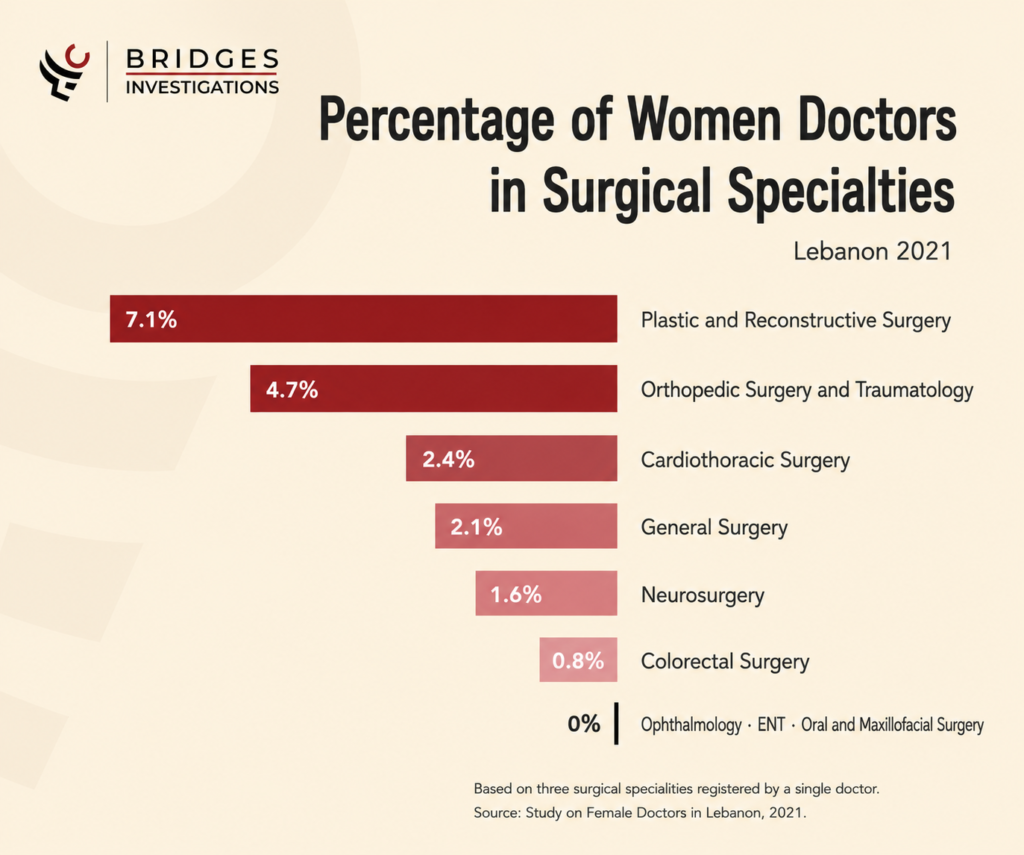
From Lebanon to Iraq, the picture becomes even bleaker. According to the 2021 Global Gender Gap Report — the most recent edition in which Iraq was included, owing to the lack of updated and systematically organized official data needed to cover the index’s four dimensions — Iraq ranked 154th out of 156 countries, behind Syria at 152nd and ahead of Yemen at 155th. The United Arab Emirates was the only Arab country in the upper half of the ranking, at 72nd. Nineveh’s surgical gender gap, then, is not a local anomaly but an extension of a regional structure in which social norms intersect with institutional fragility.
That fragility is not confined to Rasha’s story. “Zahraa” — a pseudonym for a 35-year-old doctor working in anesthesia and intensive care at Ibn Sina Hospital in Mosul — had dreamed of general surgery since her student years. She says she loved surgery from the time she studied it in medical school, earned high marks in the subject, and had no difficulty understanding it.
After graduation, the difficulties began to emerge from a direction she had not expected. She recalls that some patients refused to let her examine them because she was a woman and insisted on a male doctor, particularly in cases requiring direct examination or involving sensitive areas. The pressure did not stop with patients’ refusals; criticism from her professional and social surroundings also took a psychological toll.
“A woman doctor is psychologically drained… and fought from every direction.”
She argues that objections to women working in general surgery ignore the nature of medicine itself. “Just as male patients need a doctor to examine them, female patients also need a woman doctor to examine them. If there were one branch of general surgery exclusively for women and another exclusively for men, that might make sense — but that division does not exist in reality.”
Zahraa now works in anesthesia and intensive care, a specialty no less demanding or sensitive than general surgery and closely tied to operations and emergencies, but one that does not put her in the same direct confrontation with patients who may refuse to be examined by her or colleagues who do not accept her role.
Before specialties were assigned, she says, “I researched, asked male and female colleagues, and consulted specialists.” She adds: “More than 90% told me not to specialize in surgery.” The reason was not any weakness in her abilities, but the view — as it was put to her — that society does not readily accept a woman doctor in this kind of specialty, particularly when examining men or dealing with sensitive cases.
Asked whether she would choose surgery if she could go back in time, she answered plainly: “Not in Iraq. In another country, maybe.”
A Gap in Numbers — and in Geography
The disparity is not limited to specialties. It is also visible in the geographic distribution of medical clinics across Nineveh Governorate. The data show that certain neighborhoods attract the largest numbers of doctors, while a clear gender gap persists across them.
Al-Masaref neighborhood leads with 168 doctors, only about one-fifth of them women, followed by Al-Muthanna with 155 doctors, roughly one-quarter of them women. Some neighborhoods are closer to gender balance: Al-Zuhur recorded 35 doctors, around half of them women, while Al-Sukkar recorded 20 doctors and was among the few neighborhoods where women doctors outnumbered men.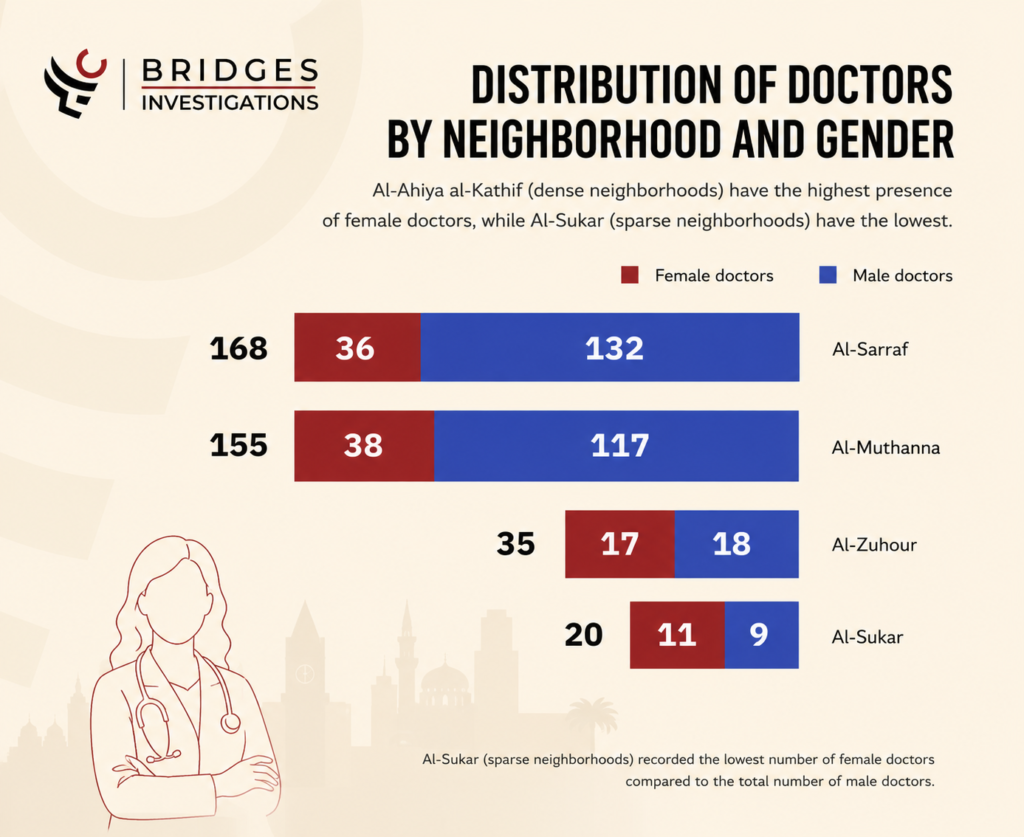
The areas with the highest concentration of clinics generally have more affluent populations than areas with fewer clinics. Strikingly, the economic empowerment that would normally give women greater scope to take on jobs requiring long hours outside the home did not erase the gap between male- and female-run clinics in these areas, suggesting that other factors are decisive.
In surgical specialties, the largest concentration of surgeons is in Al-Masaref, followed by Al-Muthanna, then Al-Barid, Al-Baath and New Mosul. This indicates that the disparity concerns not only gender, but also the distribution of specialized medical services across the governorate.
What Lies Behind the Decision to Walk Away
Lubna’s and Zahraa’s reasons for staying away from surgery explain part of a wider picture — one also reflected in Rasha’s experience and in the responses of 136 women doctors to an online survey circulated through several social-media groups bringing together doctors from different specialties in Nineveh.
The survey asked about demographic characteristics, current specialty, previous interest in surgery, factors influencing specialty choice, and challenges that may discourage women doctors from entering surgical fields.
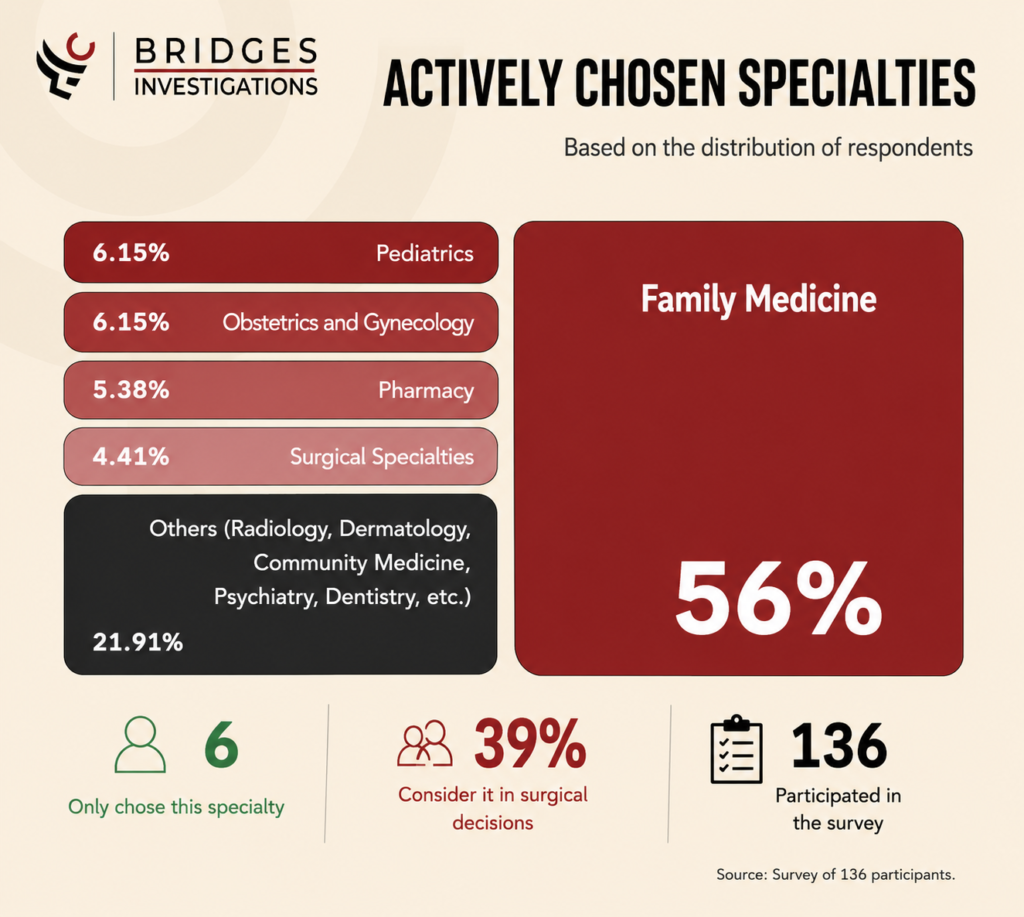
The results showed that 39% of respondents had previously considered a surgical specialty. Yet when asked what specialty they actually chose, only 4.41% of the full sample — six women out of 136 — had selected a surgical field.
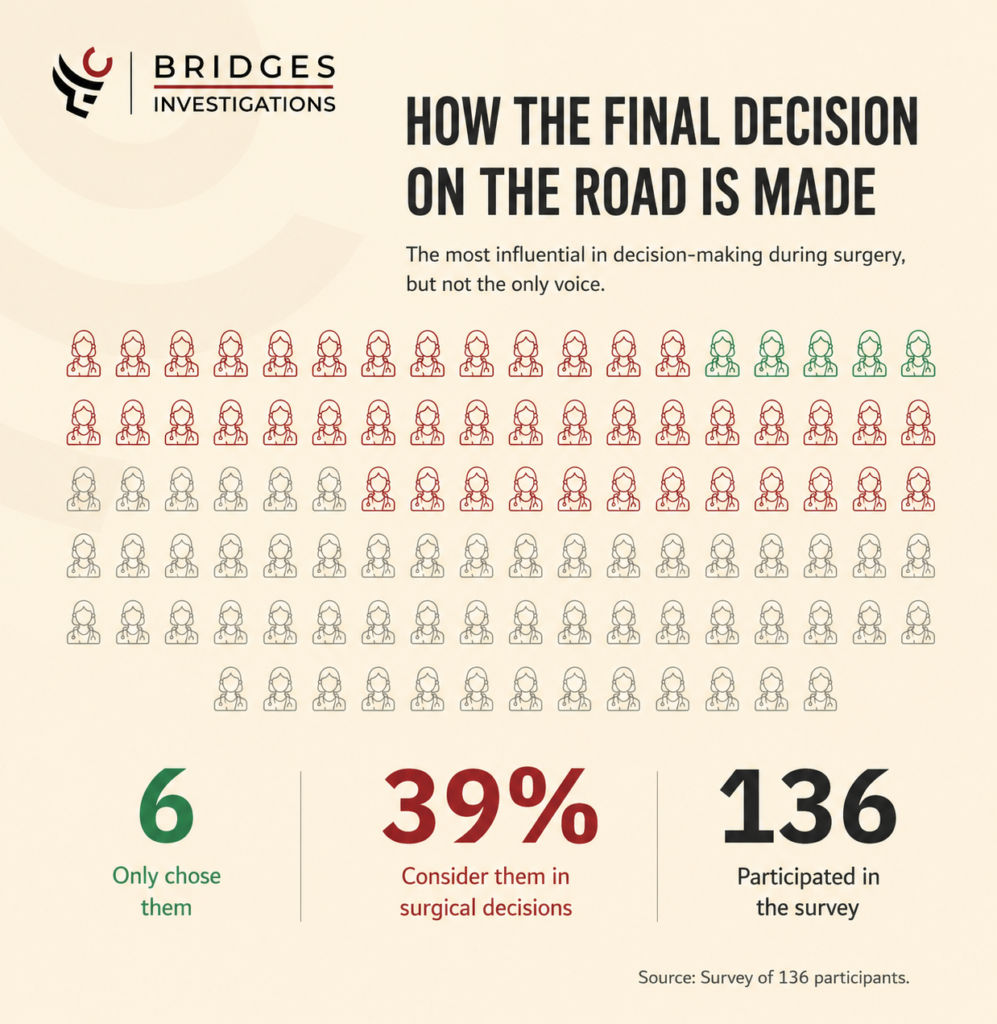
The rest were spread across non-surgical fields. Family medicine came first at 56%, followed by pediatrics and obstetrics and gynecology at 6.15% each, then pharmacy at 5.38%. The remainder worked in radiology, anesthesia, dermatology, community medicine, psychiatry, dentistry, and other fields. These results are consistent with our analysis of the Tabib app and with partial figures obtained from the syndicate on the gender distribution of doctors in thoracic surgery and neurosurgery.
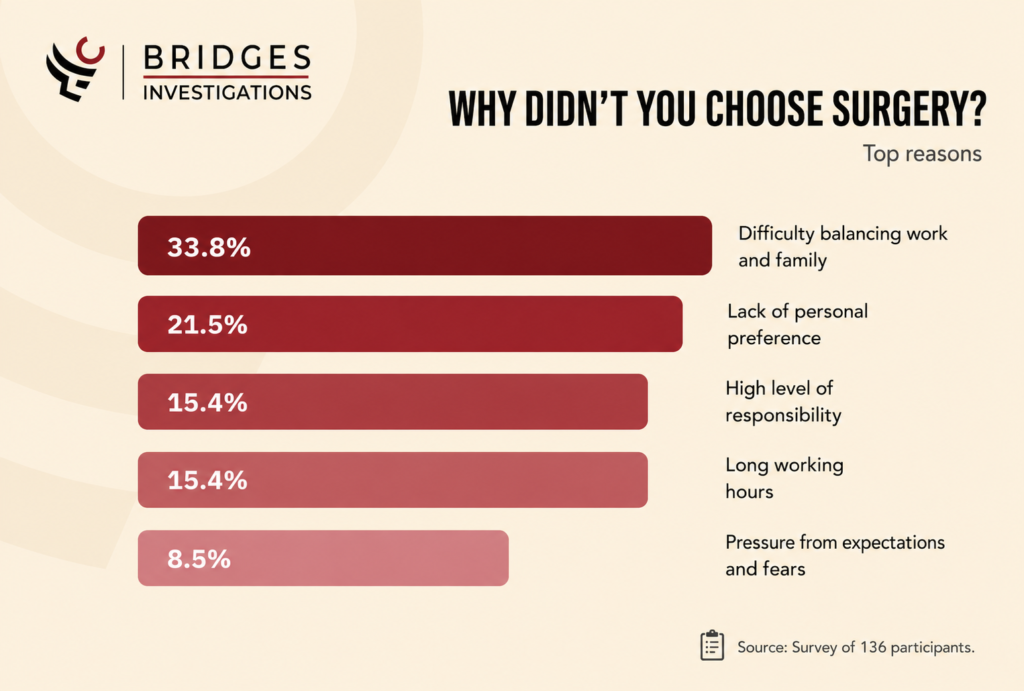
Asked why they had not chosen surgical specialties, 33.8% cited the difficulty of reconciling work and family life, followed by lack of personal interest at 21.5%. Factors related to the nature of work and training followed: high responsibility and long working hours, each at 15.38%, and the pressure of shifts and on-call duties at around 8.46%.
When asked to identify the single biggest obstacle, 48.46% chose family obligations, while 44.62% chose the nature of the work.
These figures show that the decision is rarely driven by one factor alone. A woman doctor does not necessarily turn away from surgery because she is incapable of it. Rather, she confronts a difficult equation: an exhausting specialty, long shifts, heavy responsibility, and a family that also requires her presence. At first glance, these may look like familiar barriers faced by women in many countries when entering demanding professions such as surgery.
At the level of written laws and regulations, we found nothing explicitly indicating systematic adverse discrimination against women seeking this path. Yet the survey responses reveal another side of the equation when women are asked about the design and day-to-day reality of specialist training.
Among the 130 women who had not chosen a surgical specialty, 43.85% said opportunities for men and women to enter and progress within surgical specialties were not equal. Another 40.77% said they were equal only “to some extent,” while just 14.62% considered opportunities equal. The six respondents already in surgical specialties were excluded from this part of the analysis.
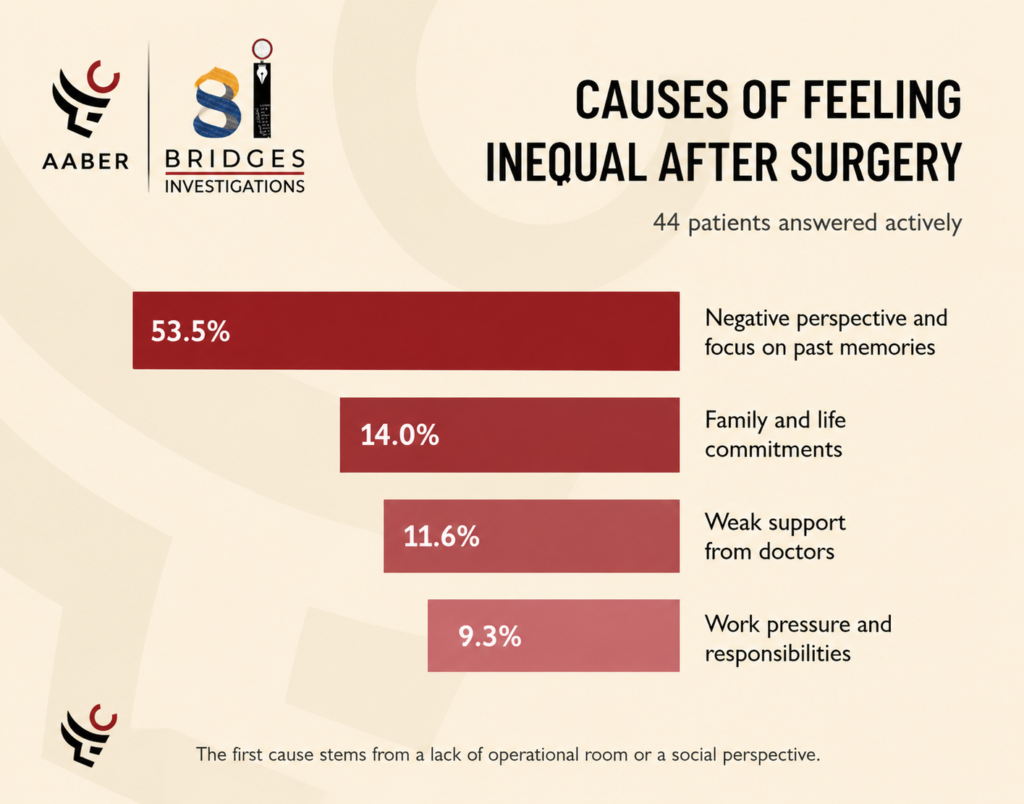
Among respondents who perceived full or partial inequality, only 44 women gave a specific reason for that belief. The prevailing social view and preference for male over female surgeons came first at 53.49%, followed by family and life obligations at 13.95%, weak support for women doctors at 11.63%, and workload and responsibility at 9.30%. In other words, the leading reason behind the perception of inequality concerned the work environment rather than the work itself.
Here lies the paradox: Iraqi rules governing admission to training programs provide formal equality between men and women, but daily reality exposes an absence of substantive fairness and genuinely equal opportunity. A woman doctor sits the same examination and completes the same training hours, yet outside the hospital she often carries additional burdens that her male counterpart does not — burdens that can force her out of the race for the surgical scalpel.
Outside the Operating Room
The paradox becomes clearer at the other end of the spectrum. According to Dr. Walaa Fathi al-Jubouri, the representative of the Iraqi Family Physicians Association in Nineveh, the proportions in family medicine are, in her estimation, almost reversed: women make up an overwhelming majority, around 93%, compared with 7% men.
The main reason, she says, is “social barriers.” Before and after marriage, a woman doctor considers that surgical specialties mean longer attachment to the hospital and overnight duties that disrupt family life, especially in the absence of evening and overnight childcare — a form of support widely recognized as important for working women in labor frameworks in different countries. Without relatives who can help care for her children, she “is forced to give up her dream and go into a field such as family medicine, because it has no on-call duties and the working day is mornings only.”
She adds that what is sometimes presented as an accommodation — assigning women doctors to morning shifts — is not necessarily designed around their needs, but can serve male doctors who prefer evening work because they are occupied with other jobs during the day. “The problem in our institutions, whether public or private, is that they give women doctors no exception other than maternity leave,” she says. “If there were centrally mandated accommodations, hospitals would be in a better position.”
Dr. Walaa sums up the contradiction in one sentence. Asked whether male and female doctors are equal in training hours and specialty allocation, she replies: “They are completely equal… There is equality, but there is no fairness.” A woman doctor, she says, is treated exactly like a male doctor with no consideration for her circumstances: no reduction in on-call duty or working hours, and if she asks to leave because her child is ill, “everyone stands against her… and she is always presumed guilty until proven otherwise,” accused of inventing excuses to obtain leave. Even the breastfeeding hour that once allowed a doctor to return home to feed her child and then come back to work is something she is no longer sure remains in effect.
She describes hospitals as largely operating from alternative premises, while the women doctors’ residence is “very dilapidated and so small that it cannot accommodate their numbers.” There is no nursery where a doctor can leave her children and no facilities that help her pursue a surgical specialty.
On patient trust, Dr. Walaa says the argument “may have been true 20 years ago.” Women doctors have now proved themselves, she says, and there are highly competent female physicians whom patients trust. The problem, in her view, lies in the “social mindset.” Society in the governorate — and the medical community in particular — “tries to break a woman” and does not want to give her a chance, as though her success somehow diminishes other people’s masculinity. She points to the way some people react even to a woman simply driving a car: “Imagine, then, what it is like in the workplace, especially in medicine.” She nevertheless believes things have begun to improve slightly — but extremely slowly. “We don’t need another 20 years… no, another 40 years before things improve a little.”
“We are always fought, everywhere. Even if a woman proves she is better than ten men, in their eyes she remains second-class.”
Patient Trust: The Hidden Barrier
Although Dr. Walaa rejects lack of patient trust in women doctors as a major reason women avoid surgery, one of the survey’s clearest findings is that patient confidence still shapes how women doctors imagine their future in surgery — closely echoing Zahraa’s experience.
Of the 130 respondents who had not chosen a surgical specialty, 56.15% — 73 women — said they believed patients trusted male doctors more than women doctors. Another 33.08% said this was true “to some extent,” while only 10.77% answered no.
Asked to explain their answers, most respondents referred to society’s view of women. Some patients, they said, perceive a woman doctor as less capable or less bold than a man, particularly in surgery. Male doctors are associated, in some people’s minds, with traditional ideas about physical strength, endurance and greater availability, reinforced by the visibility of many well-known male surgeons.
This barrier does not appear in official instructions. It appears in examination rooms, corridors, conversations with patients and their relatives, and the daily comparisons that can follow a woman doctor from the beginning of her training. These factors did not stand only between Zahraa and her dream, but between dozens of women doctors and theirs.
It was the same barrier Lubna encountered at the outset. Neurosurgery, in the eyes of the society around her, remained a field said to be better suited to men. She understood that many patients, given a choice between her and a male doctor, would choose the man — not because she was less competent, but because prevailing assumptions confer trust on men. According to the women doctors interviewed for this investigation, that lack of trust is not confined to patients; it can extend into the system itself, which reinforces the message to women doctors in different ways.
Excellence in Surgery Is Not Enough
If the story of a dream abandoned before it began shows one side of the problem, Dr. Rasha’s experience as a neurosurgeon shows what can await a woman who insists on going all the way.
Dr. Rasha Abdul-Hafiz al-Yuzbaki ranked first in the Arab Board examination and became a specialist in late 2022. According to her official statistics, she recorded the highest number of operations in government hospitals in her branch: 286 operations in 2023, rising to around 300 in 2025. Yet rather than being rewarded, she says, her performance became a problem. After she topped the figures, the department leadership issued an official directive preventing a specialist from carrying out more than five operations a day, “after I had been admitting nine or ten patients during official working hours.”
Her account does not stop with the numbers. After a professional dispute with nursing staff inside the operating theater led her to file a formal complaint, she says management sided against her and that her official memoranda were withdrawn or cancelled. She also says she was threatened with transfer to a new peripheral hospital lacking equipment and emergency services — something she interpreted as an attempt to obstruct her work. Even her approved transfer to the higher-education payroll, which she says had the consent of both the Ministry of Higher Education and the Ministry of Health, remained suspended for about two years because the budget had not been approved.
According to her account, the bias also extends to training opportunities. Important ministry-funded courses, some of them in Europe, are not announced to everyone. “If useful opportunities were available to everyone, they would be announced clearly. But we only hear about them when we see that a doctor has already been sent on a ministry-funded training course.” By contrast, she says, only courses she considers “trivial and that we do not need in the first place,” or courses doctors attend at their own expense, are openly announced to all.
She recounts another episode she sees as reflecting the same bias. When the deputy director of health at the time insisted that the branch’s advisory committee include a woman doctor — there were four or five women specialists in neurosurgery — Rasha was appointed. Male doctors then complained to the directorate until she was removed from the committee.
This is not testimony merely about “social attitudes.” It is an account of decisions, official correspondence and administrative procedures that document how an institution itself can become an obstacle to the most productive woman doctor in her branch.
Younger women doctors describe similar experiences. Zahraa says that after she helped manage a stable emergency case appropriately, she heard a doctor tell colleagues that she was “hesitant and does not know how to handle surgical cases.” Important cases, she says, were given to male doctors “so they could learn more,” while women doctors were left with simpler tasks, and colleagues would re-examine her patients to check her work. “That made me realize the problem was not my ability,” she says, “but the fact that I was a woman doctor trying to enter a field some people consider to be for men only.”
A Male Doctor Testifies to the Gap — and Its Causes
Dr. Ismail Dawood Ismail, who headed the Department of Internal Medicine at the University of Mosul from 2016 to 2020, says the gender gap had been visible for years across a number of specialties.
According to his account, the internal medicine department at one point had 36 male doctors and only one woman doctor in rheumatology. Psychiatry had two women doctors and no men, while dermatology had two women and one man. In surgery, to the best of his knowledge, there were only one or two women doctors compared with around 40 men or more.Dr. Ismail sees no single explanation for the factors limiting women’s entry into surgical specialties. Rather, he points to overlapping pressures: family obligations, childcare and housework, as well as the difficulty of surgical specialties and the psychological and physical stamina they demand. He also notes that some women prefer specialties involving less confrontation with patients and their relatives or less direct responsibility than surgery.
Nineveh Doctors’ Syndicate: No Formal Ban
The Nineveh Doctors’ Syndicate offers another perspective. According to statements attributed to the syndicate, represented by Dr. Mohammed Suleiman al-Houri and Dr. Ibrahim Hafiz al-Maadidi, there is no formal reason preventing women doctors from entering surgical departments and no legal barrier to applying for these specialties. From the syndicate’s perspective, specialty choice is fundamentally a matter of each doctor’s preference.
At the same time, the syndicate acknowledges that training and working patterns in these fields are exhausting, particularly because of long hours and operations that can sometimes last more than five hours. It stresses that Iraqi and Arab Board requirements are the same for both sexes: candidates must complete the prescribed training hours and schedules and pass the examinations, with no formal distinction between men and women.
Documents from the Iraqi Board for Medical Specializations confirm that surgical training is demanding, particularly in the absence of infrastructure that could help women doctors meet social responsibilities — such as childcare — or a supportive environment, including cooperative colleagues and patients willing to be treated by them.
The 2024–2025 General Surgery Board curriculum is a five-year residency program covering sequential rotations in basic surgical sciences, trauma, emergency surgery and intensive care, orthopedic, vascular, thoracic, urological and plastic surgery, and later gastrointestinal, liver and breast surgery, alongside intensive on-call duties and standardized examinations. Male doctors face the same curriculum. The difference lies not in the syllabus, but in the surrounding circumstances that make the cost of those five years heavier for women.
This position raises a question at the heart of the investigation: is legal equality enough to produce real fairness?
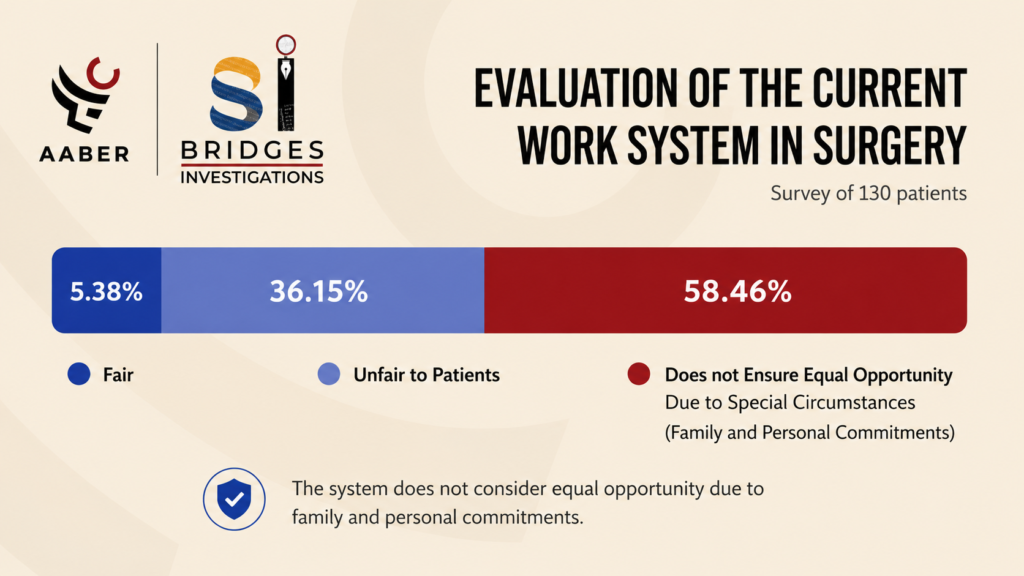
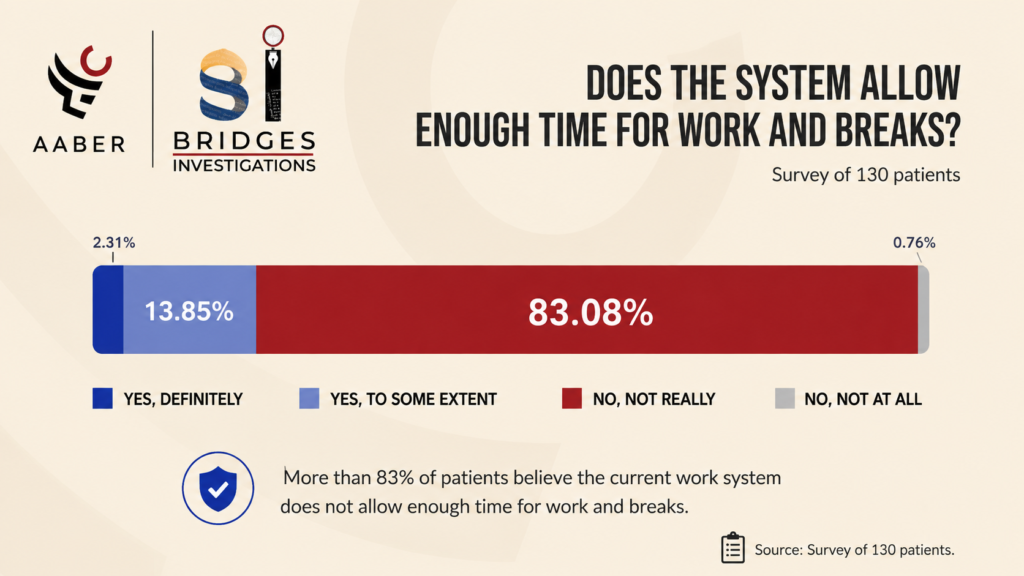
The survey supports this conclusion. Of 130 women who answered questions about working conditions in surgery, 58.46% said the current system is based on equal treatment of male and female doctors without taking account of circumstances such as motherhood and family responsibilities. Another 36.15% considered the system unfair to women doctors, while only 5.38% considered it fair. Asked specifically about working hours and on-call duties, 83.08% said the current system does not take women doctors’ circumstances into account, 13.85% said it does so to some extent, and only 2.31% answered yes.
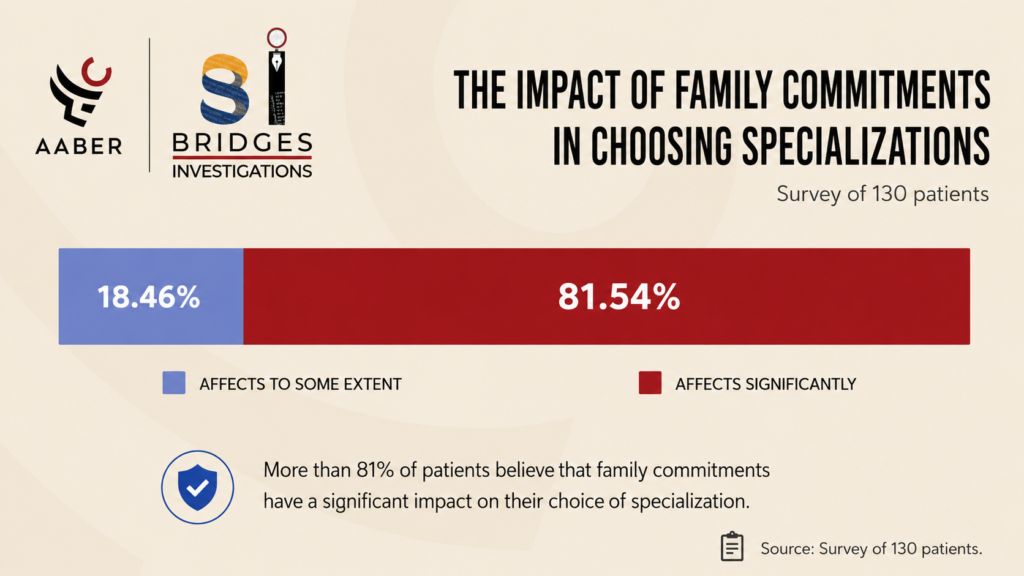
The results also showed that family obligations such as motherhood and childcare strongly influence specialty choice: 81.54% said they have a major impact and 18.46% said they have some impact. These findings reinforce testimony about the absence of childcare facilities as one of the most significant structural disadvantages affecting women doctors and discouraging them from surgical specialization.
A Legislative Environment That Fails Women Doctors
The testimonies and data collected for this investigation depict the social and institutional environment facing an Iraqi woman doctor who wants to specialize in surgery. Legal documents reveal a deeper layer that is rarely examined: Iraq’s legal framework contains provisions that can directly or indirectly weaken women doctors’ professional and social position.
Article 41 of Iraqi Penal Code No. 111 of 1969 recognizes what is described as a husband’s “right of discipline” over his wife, a provision that entrenches dependency and can limit a woman doctor’s autonomy over decisions such as overnight duty or travel for intensive surgical training. Article 409 of the same law, by providing mitigating excuses in what are commonly described as “honor” crimes, contributes to an unsafe environment for women doctors in conservative communities, where they may face stigma or threats simply because their work requires mixed-gender interaction or late working hours.
By contrast, the Doctors Protection Law No. 26 of 2013 is a positive step in criminalizing tribal claims and coercive demands in Articles 1 and 5. Yet in practice, a wide enforcement gap remains. Women surgeons can find themselves without effective protection against tribal settlements or demands after a medical complication, leaving a doctor alone to face threats or potentially pushing her to leave the specialty or pay financial settlements outside the legal framework.
The new on-call system adopted by the Ministry of Health in 2025, based on three work shifts, also failed to account for the specific security and social circumstances of women doctors in Nineveh. The absence of safe accommodation inside hospitals and the difficulty of traveling at night in certain areas can turn the system into an additional burden rather than a tool for fair workload distribution — a concern also raised in testimony about the condition of the women doctors’ residence.
The picture that began with the numbers is now complete: the gap is not the product of an abstract “social attitude,” but of an intersection between social norms, an institution that fails to accommodate women doctors, and a legal environment that weakens them when it fails to protect them.
The Gap Is Not Inevitable
This structure is not inevitable. In Gulf countries whose societies share with Iraq features of social conservatism and structures influenced by factors such as tribalism, the gap is visibly smaller. Women account for 63% of surgical residents in Oman, 39% in Bahrain and 27% in Saudi Arabia. In 2018, Kuwait established the region’s first women’s surgical group, the Kuwait Association of Women Surgeons. Where improvement has occurred, it has been accompanied by institutional action — a point also reflected in survey responses about what would encourage more women to become surgeons in Nineveh.
Asked what might encourage them to enter surgical specialties, the 130 women who had not chosen surgery — out of 136 survey respondents — placed financial incentives first at 34.62%, followed by a better working environment at 26.92%, more flexible working hours at 17.69%, and stronger institutional support at 16.15%, alongside scattered answers such as personal motivation and the desire to help female patients.
Asked how the working environment could be improved, the clearest proposal was a hospital-based nursery or childcare center operating 24 hours a day, enabling women doctors — especially during shifts and overnight on-call duty — to reconcile professional and family responsibilities.
These proposals overlap with Dr. Ismail’s suggested solutions: encouraging women doctors to enter highly specialized fields; expanding training opportunities, particularly in laparoscopic surgery; supporting their participation in conferences and seminars; enforcing laws that protect them from abuse; and raising public awareness of women’s role in surgical specialties.
The legal documents add another dimension: meaningful reform would also require reviewing provisions that weaken women doctors’ position, enforcing protection against tribal coercion, and designing an on-call system that takes account of their safety, accommodation, and transport.
These solutions also converge with Dr. Walaa al-Jubouri’s argument that meaningful change begins by making accommodations centrally mandated rather than dependent on individual discretion: evening and overnight childcare inside hospitals, decent accommodation large enough for women doctors, and genuine consideration of their circumstances when assigning on-call duties. Formal equality in regulations, she says, does not create fairness.
Returning to Lubna’s Unfinished Dream
At the end of this investigation, we return to where it began: Lubna, the child who saw her teacher’s hands tremble and decided she would become a neurosurgeon. Looking back today at what she saw and heard on the road toward that dream, she describes, without embellishment, how her enthusiasm gradually went out.
Lubna says the rules may be equal when it comes to admission and examinations, but the absence of flexibility and consideration for women doctors’ circumstances makes the competition harder. The problem was never her ability, she says, but the surrounding environment: social attitudes, time pressure, the nature of the work, and the lack of accommodation for family responsibilities.
Today Lubna practices dentistry, while neurosurgery remains a deferred dream — one of many dreams postponed in Nineveh, each belonging to a woman doctor who never reached the operating room in which she once imagined herself.
The data, testimonies, official statements and documents show that women doctors’ low participation in highly specialized surgical fields cannot be explained by personal preference alone. Some women loved surgery and excelled in it academically. Some came very close to that path — and one reached it and topped its statistics — only to retreat or find themselves constrained by a reality far more complex than an individual career choice.
A male doctor faces the difficulty of the specialty. A woman doctor faces the difficulty of the specialty plus additional questions: Will patients accept her? Can she reconcile on-call duty with family life? Will she find support within the training environment? Will her husband or family accept the nature of the work? And will the health institution give her a fair opportunity not only on paper, but in practice?
Women’s weak presence in surgery therefore reflects less a lack of competence than an environment in need of reform. Equal admission and training requirements are not enough unless accompanied by fairer policies that recognize social and family responsibilities and protect women doctors both legally and institutionally.
In the end, operating rooms do not need more men so much as they need more capable surgeons. The women doctors who left their dream of surgery did not always leave because they no longer wanted it, but because the path to it was not sufficiently open.
This investigation is conducted in collaboration with Aaber and Bridges Investigations.