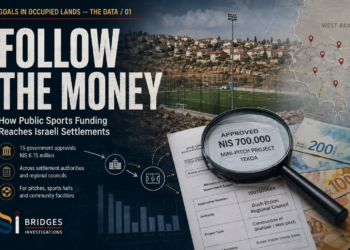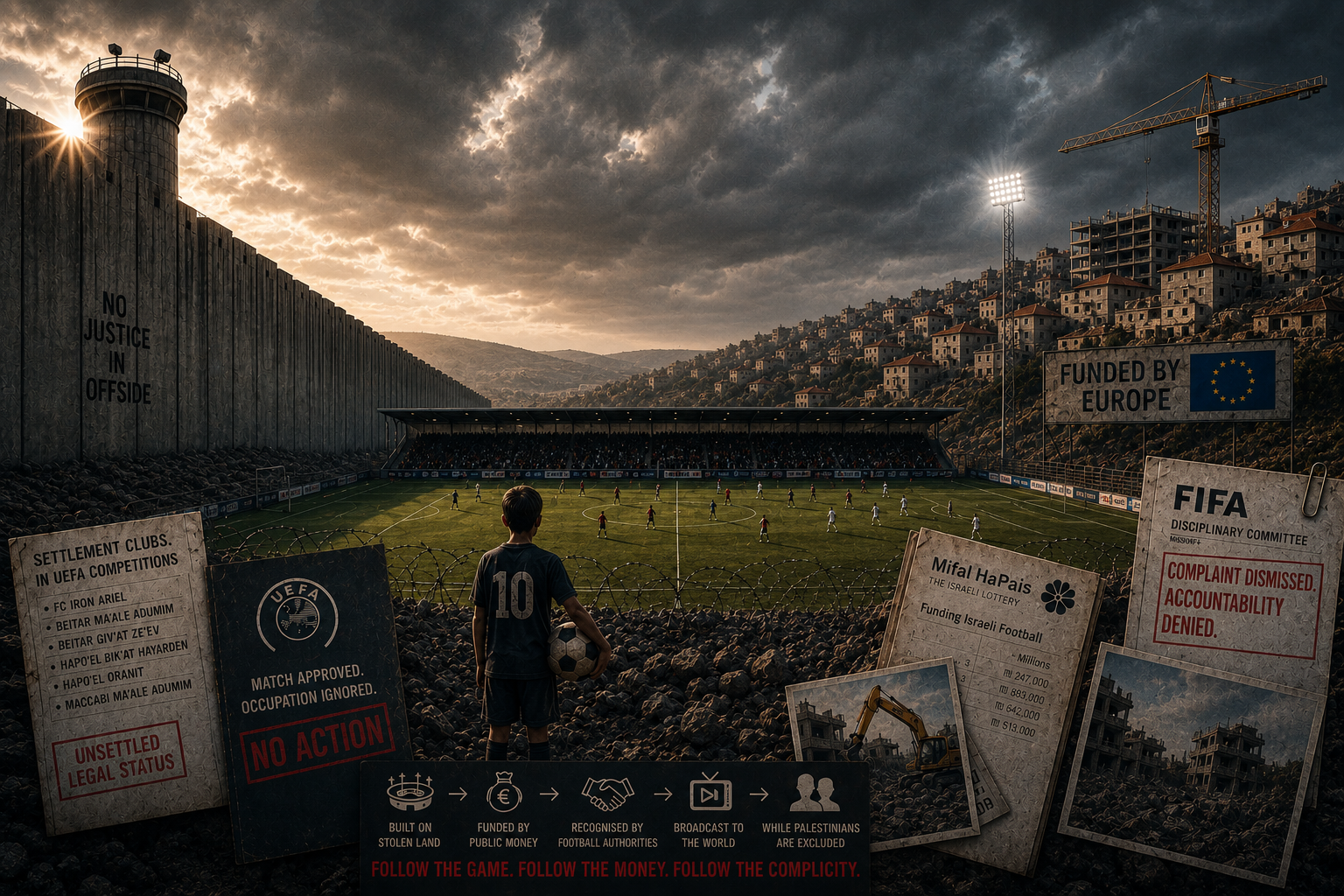
This investigation reveals how football clubs in Israeli settlements have expanded in the years since the war on Gaza. It also shows how FIFA has benefited from broadcasting matches played in these settlements. And although the European Union has said it is committed to international law – which states that establishing settlements is illegal – the Union of European Football Associations (UEFA) is breaching international law by financially supporting the Israel Football Association, which allows settlement teams to take part in domestic competitions. Meanwhile, just a few kilometres away, Palestinians face sports-facility closures, the demolition of football grounds and restrictions on sporting activity.
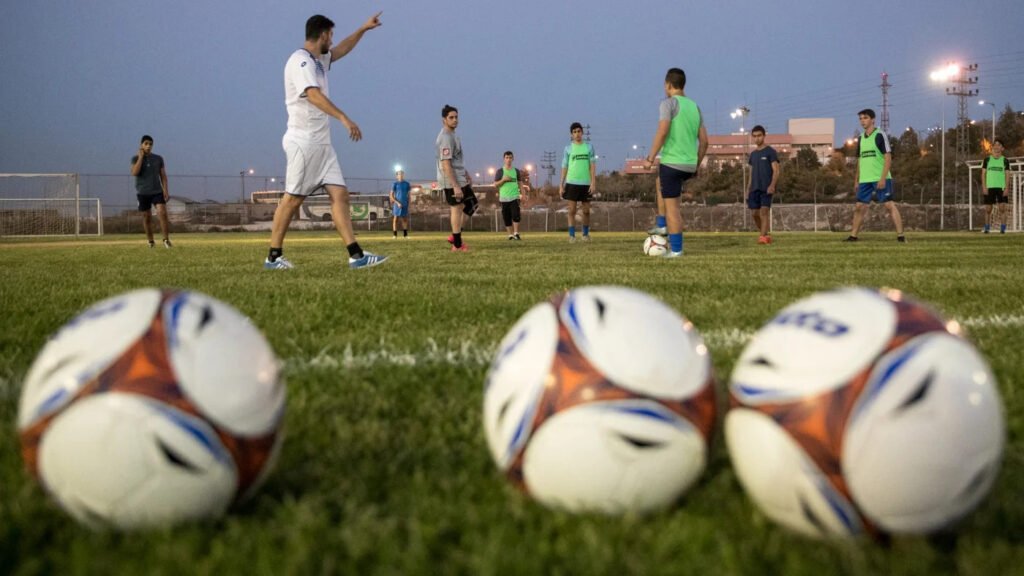
He puts on his gloves, ties up his boots, and heads towards the goal, ready to fend off any attack. But this time, the attack did not come from the pitch.
The sound of explosions fills the air and tear gas rains down, sending a suffocating stench wafting across the pitch. Al-Assi coughs and his eyes stream as the floodlights go out one by one. The pitch turns suddenly into a battlefield, surrounded by heavily armed Israeli forces.
Ever since October 7, 2023, training for Mahdi Al-Assi, goalkeeper for the Palestinian youth team, has become a daily battle against checkpoints, raids and restrictions on movement. “More than once, I’ve set off three or four hours before training, only for them to turn us back at the checkpoint for no reason at all.”
Just a few kilometres from Al-Assi’s ground, the floodlights are on at the football pitch inside the Israeli settlement of Givat Ze’ev, built on land in the West Bank town of Beitunia. The Beitar Givat Ze’ev team is free to get on with their training on land that international law classifies as occupied Palestinian territory.
A Journey of Checkpoints and Humiliation
Al-Assi describes how routine travel between Palestinian cities has become a gruelling and humiliating ordeal because of Israeli military checkpoints. The hardship extends beyond delays and being turned back at checkpoints: according to Al-Assi, Israeli forces also disrupt sporting activities by storming pitches.
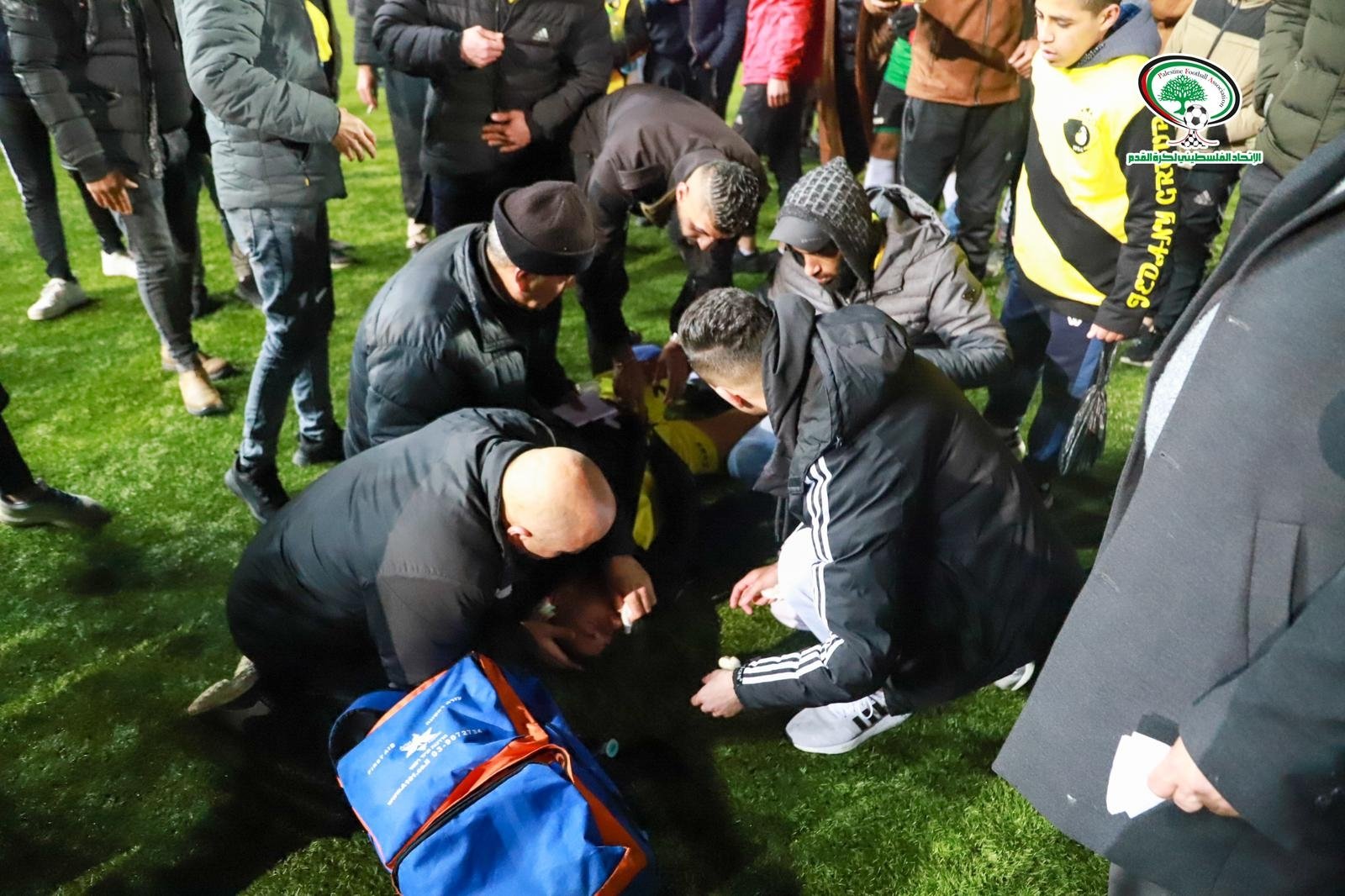
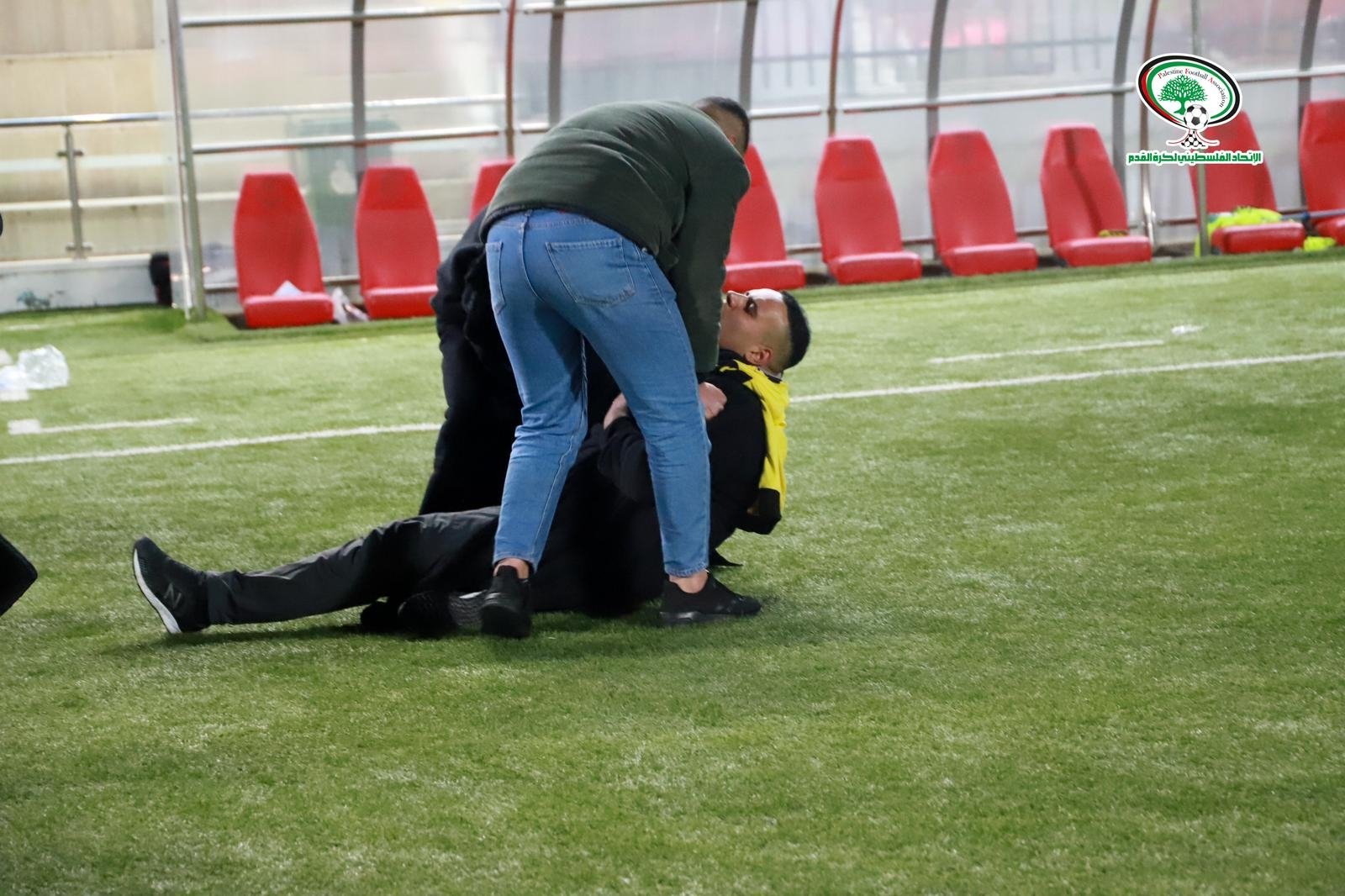
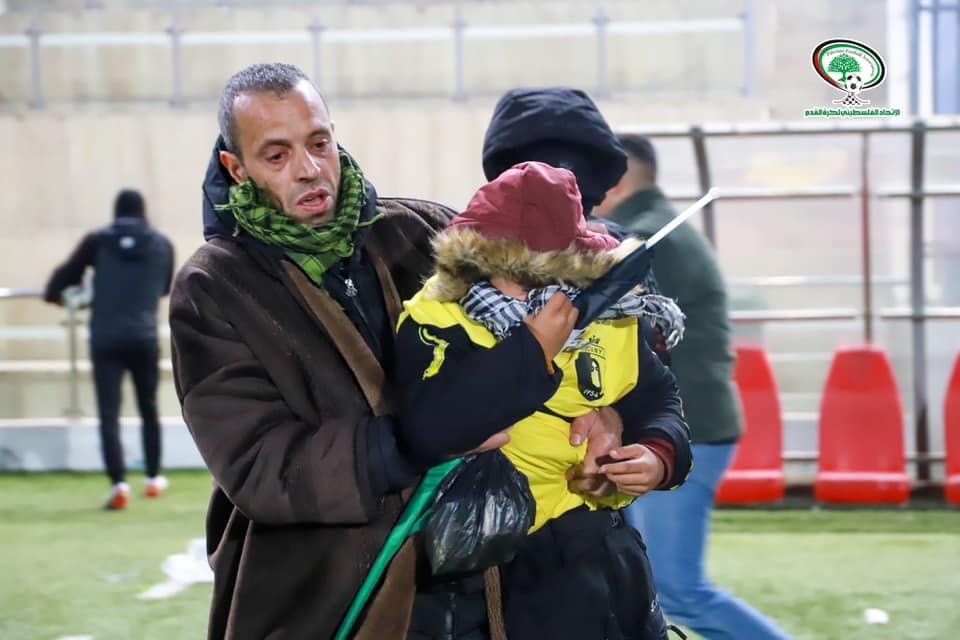
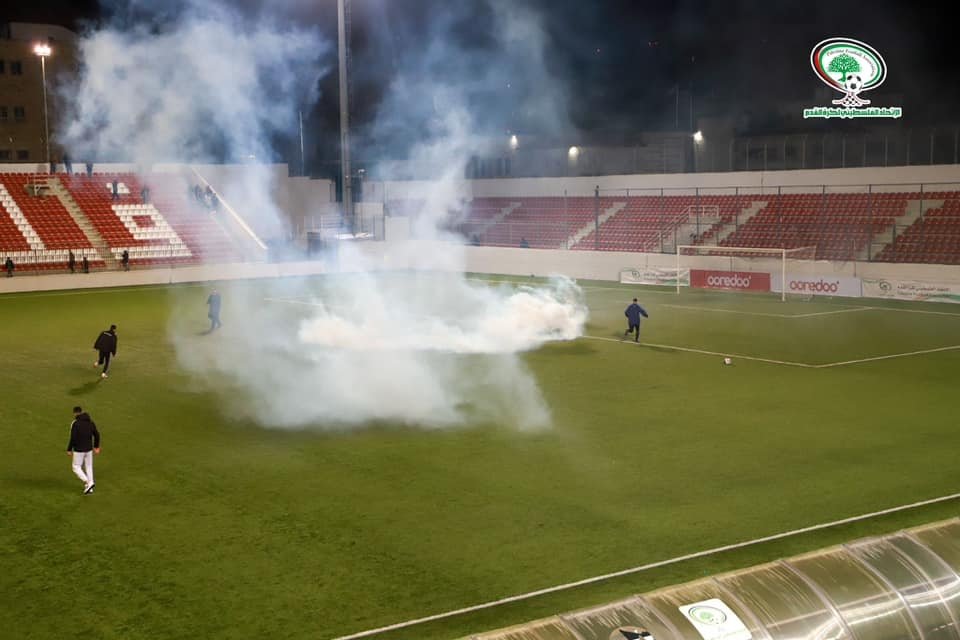
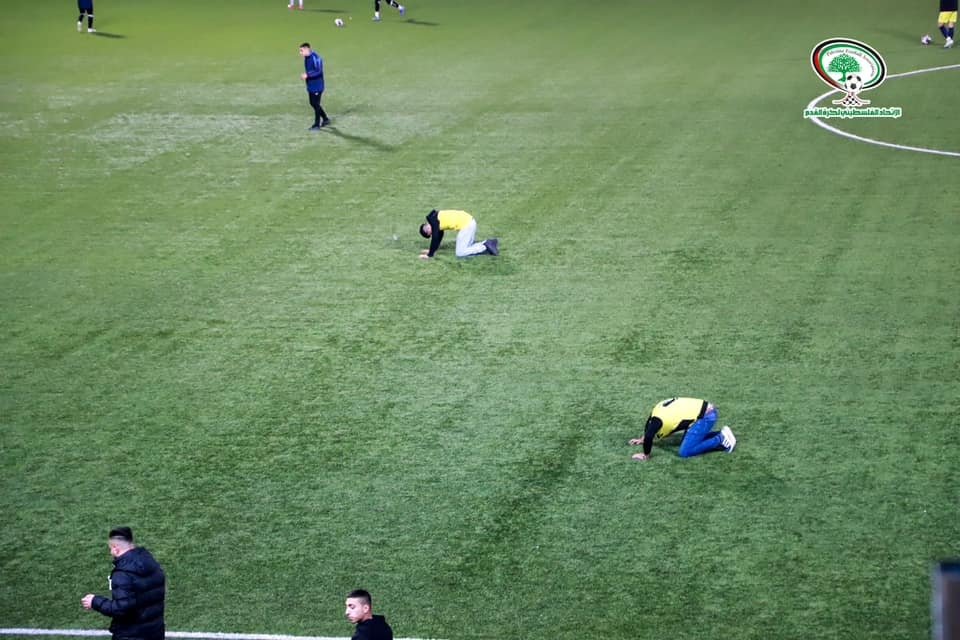
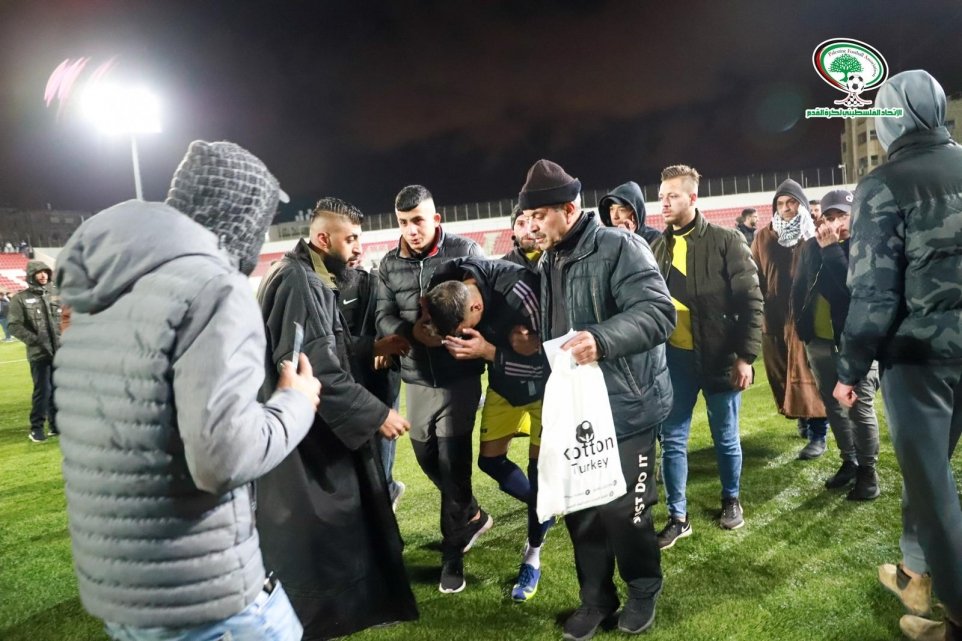
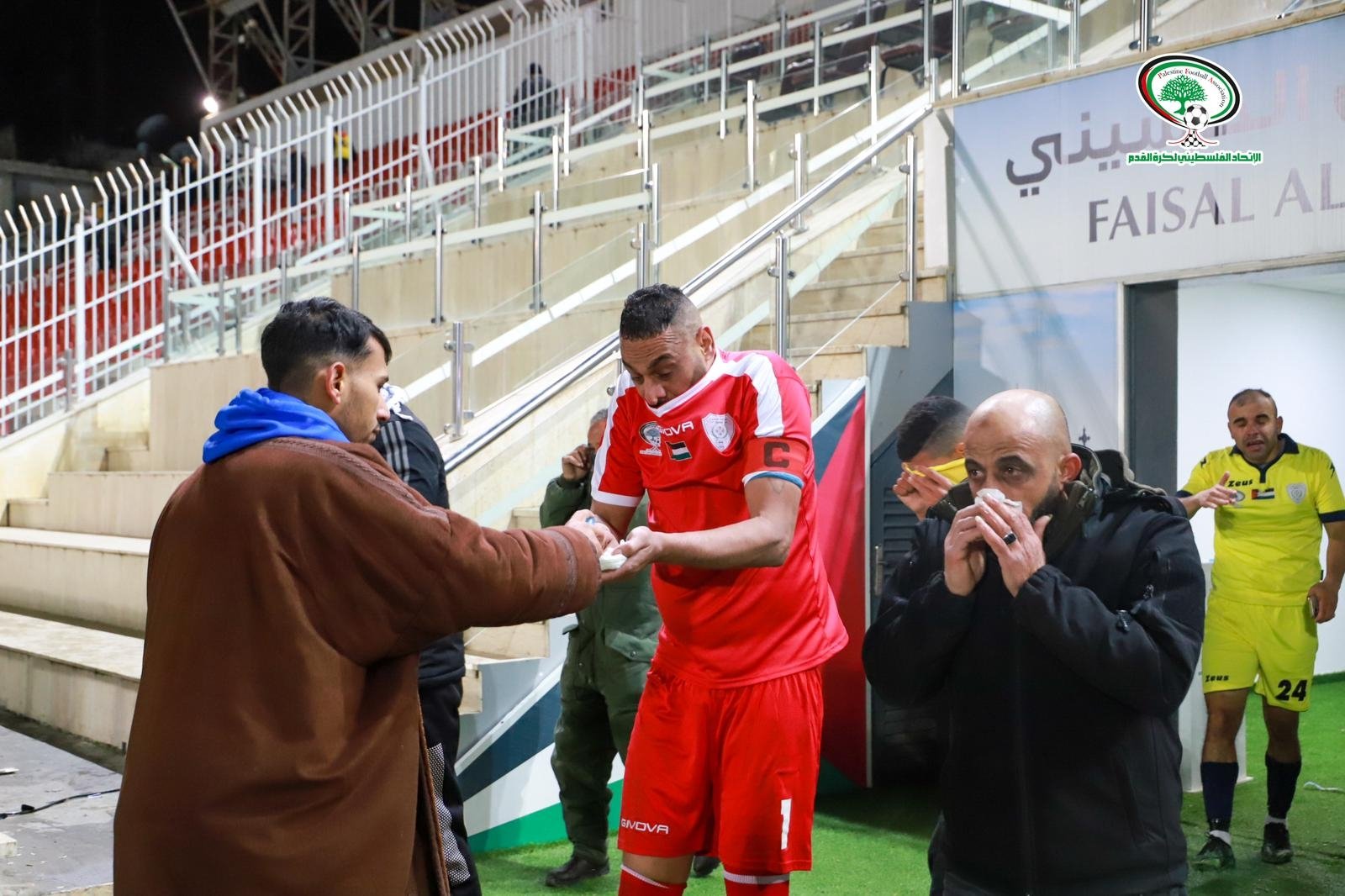
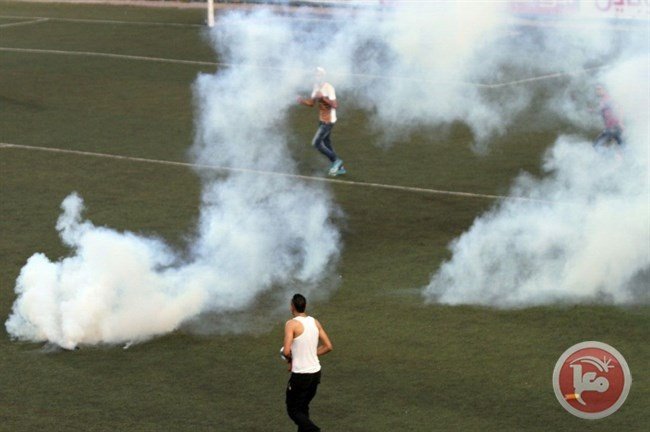
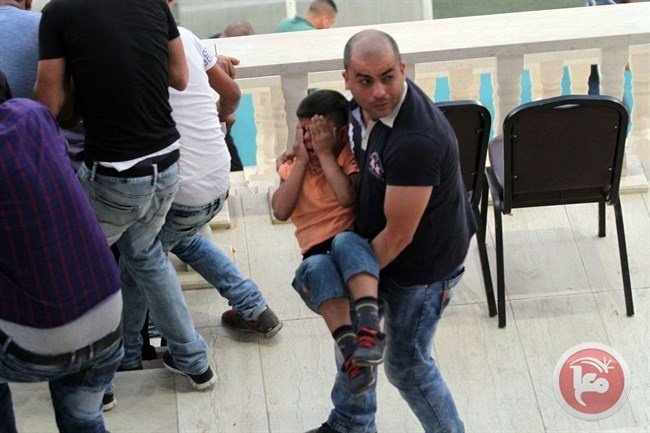
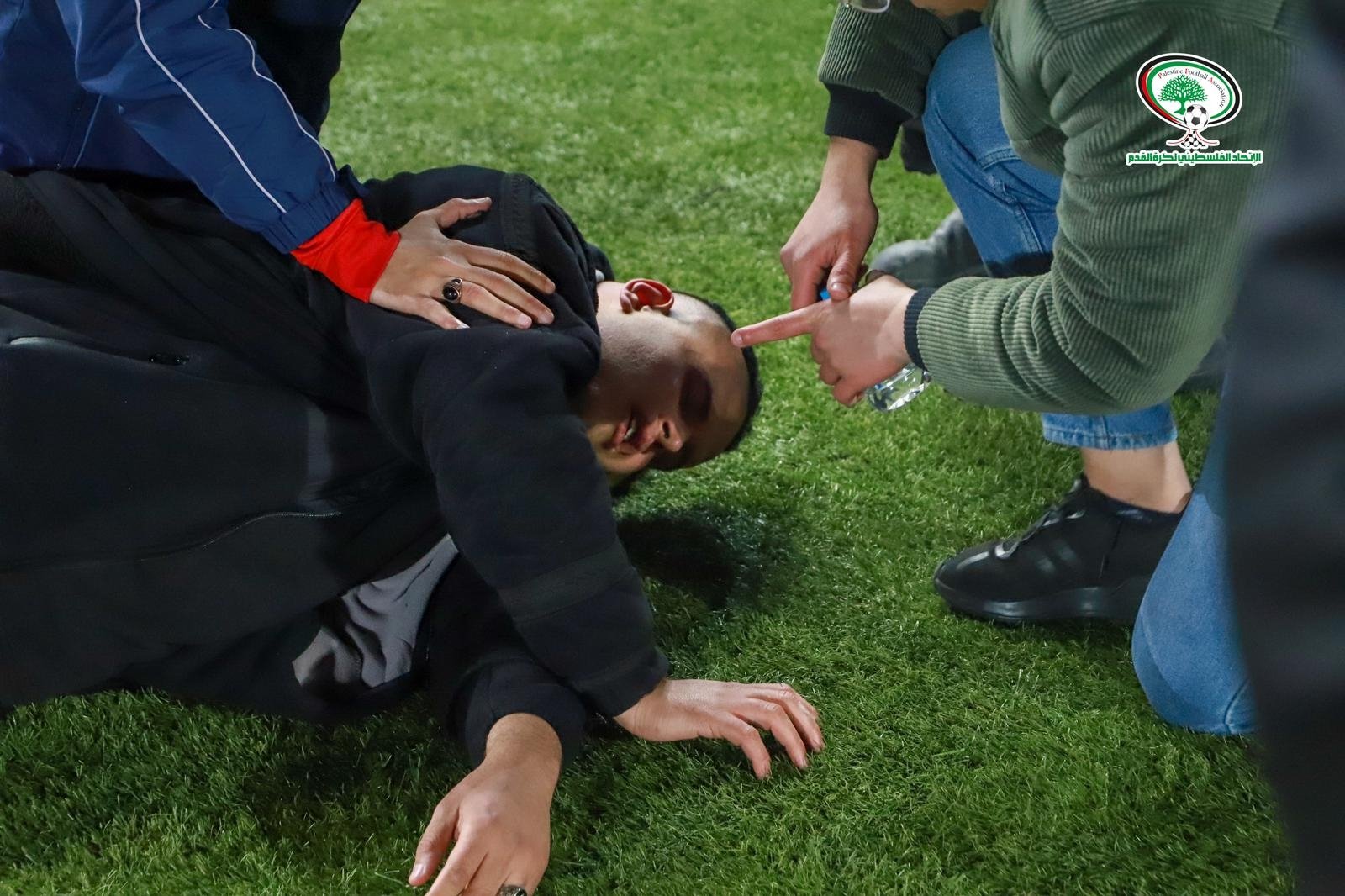
Dozens suffered from suffocation after Israeli occupation forces fired tear gas canisters at the Faisal Al-Husseini Stadium. (video: Felesport )
Since October 7, 2023, 292 sports facilities have been completely or partially destroyed in the West Bank and Gaza, according to data we obtained from the Palestinian Football Association.
Since that date, the association’s league has been suspended. “It became too dangerous to keep the league going,” says Susan Shalabi, vice-president of the Palestinian Football Association. “There are more and more checkpoints, and towns are sealed off by electronic gates, trapping people inside.”
She adds that it has become virtually impossible to arrange matches: “We can’t schedule the league; the gates could be shut at the time of a match, so it gets cancelled.”
After the league was cancelled, Al-Assi was no longer able to train regularly, so he turned to a private coach. “Because of the war, no games are being played now. But playing matches is a basic element in a footballer’s development, so I’m training with a private coach.”
This places an additional financial burden on him, but he is determined to bear it so he can continue playing, in the hope of representing his country in international competitions.
While Palestinian footballers face immense difficulties, clubs in settlements are able to continue expanding their activities and improving their grounds, with support from FIFA.
Football Supporting Settlement Expansion
The Israeli settlement of Ariel was established in August 1978 on land confiscated by Israel from Palestinians in the area of Salfit in the occupied West Bank; specifically on parts of the towns of Salfit, Iskaka, Marda and Kifl Haris.
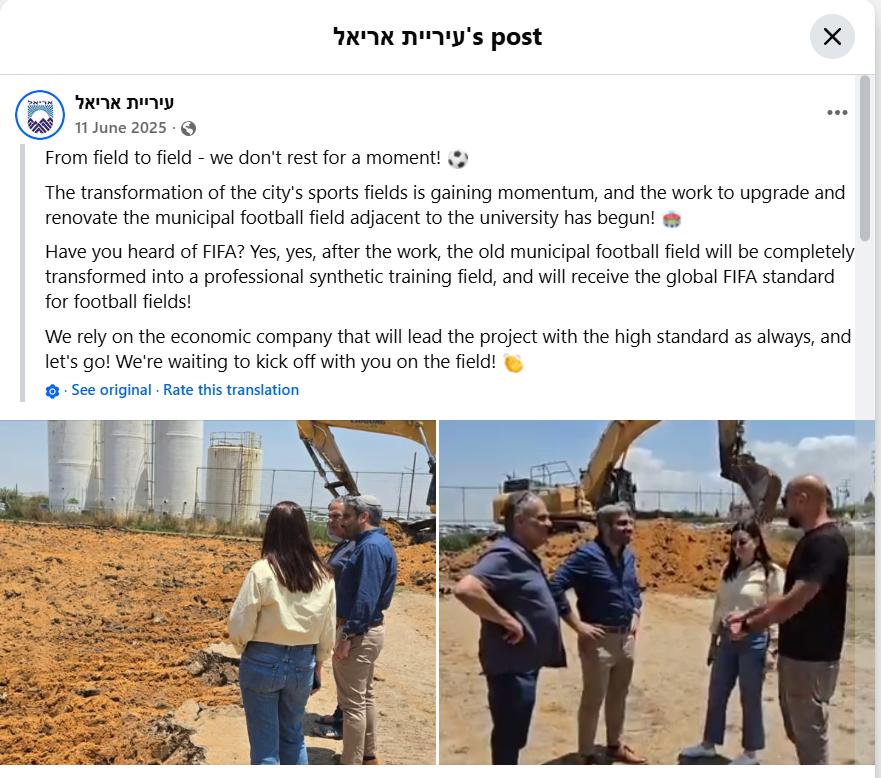
Against the backdrop of continued settlement expansion, Ariel Mayor Yair Shatbon stepped up investment in sports infrastructure in 2025, directing millions of shekels toward the development and upgrading of football facilities. This included the construction of a new football ground on Efrata Street and more football pitches and sports facilities throughout the settlement.
The mayor also announced a project to modernise the main pitch of Ironi Ariel Football Club, including replacing the turf with artificial grass that meets FIFA standards.
Article 49, paragraph 6, of the Fourth Geneva Convention of 1949 relative to the Protection of Civilian Persons in Time of War states that: “The Occupying Power shall not deport or transfer parts of its own civilian population into the territory it occupies.”
A 2016 report by Human Rights Watch criticised FIFA for funding matches held within settlements, as these are “illegal under international humanitarian law”.
The issue of clubs in settlements dates back to 2013, according to Susan Shalabi, when their details appeared on the official website of the Israel Football Association, before later being removed as international attention on the issue grew. “FIFA didn’t take any position on clubs, so their numbers went from five to around nine today,” she says.
“FIFA just tells you to go back to the UN, and what does the UN say? It says these are occupied territories,” she adds.
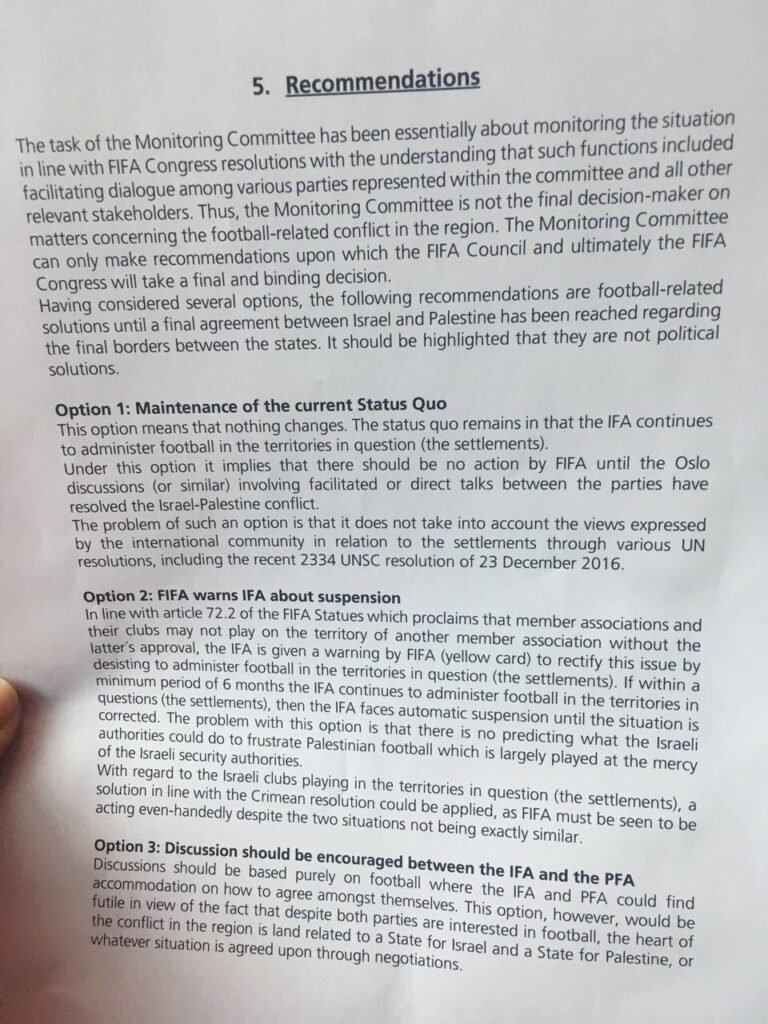
A recommendation from Tokyo Sexwale, head of the Committee on Israeli-Palestinian issues
FIFA+ broadcasts matches from within the settlements
FIFA has not only adopted a position of silence towards settlement clubs; it has gone as far as broadcasting their matches.
Evidence online, which is documented by research published in Scottish Sport for Palestine’s report ‘Beyond the ‘Green Line ‘, shows that the FIFA+ platform broadcast and archived at least three matches from the Har Homa stadium in occupied East Jerusalem and shared links to these games on DAZN, at the same time as the case of settlement clubs was under appeal at the Court of Arbitration for Sport.
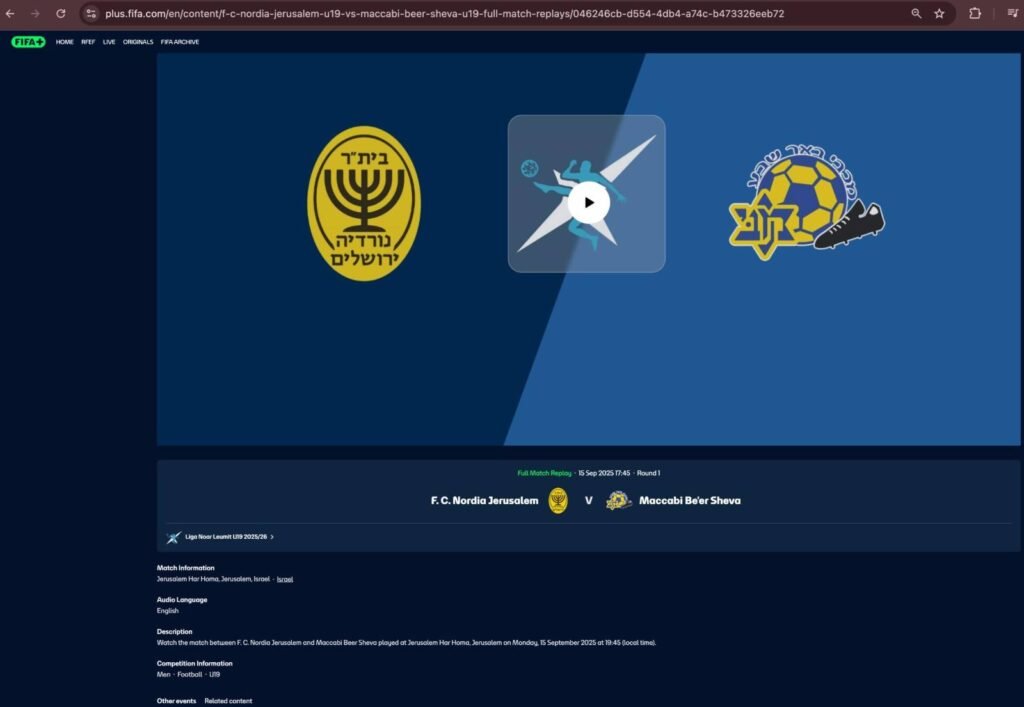
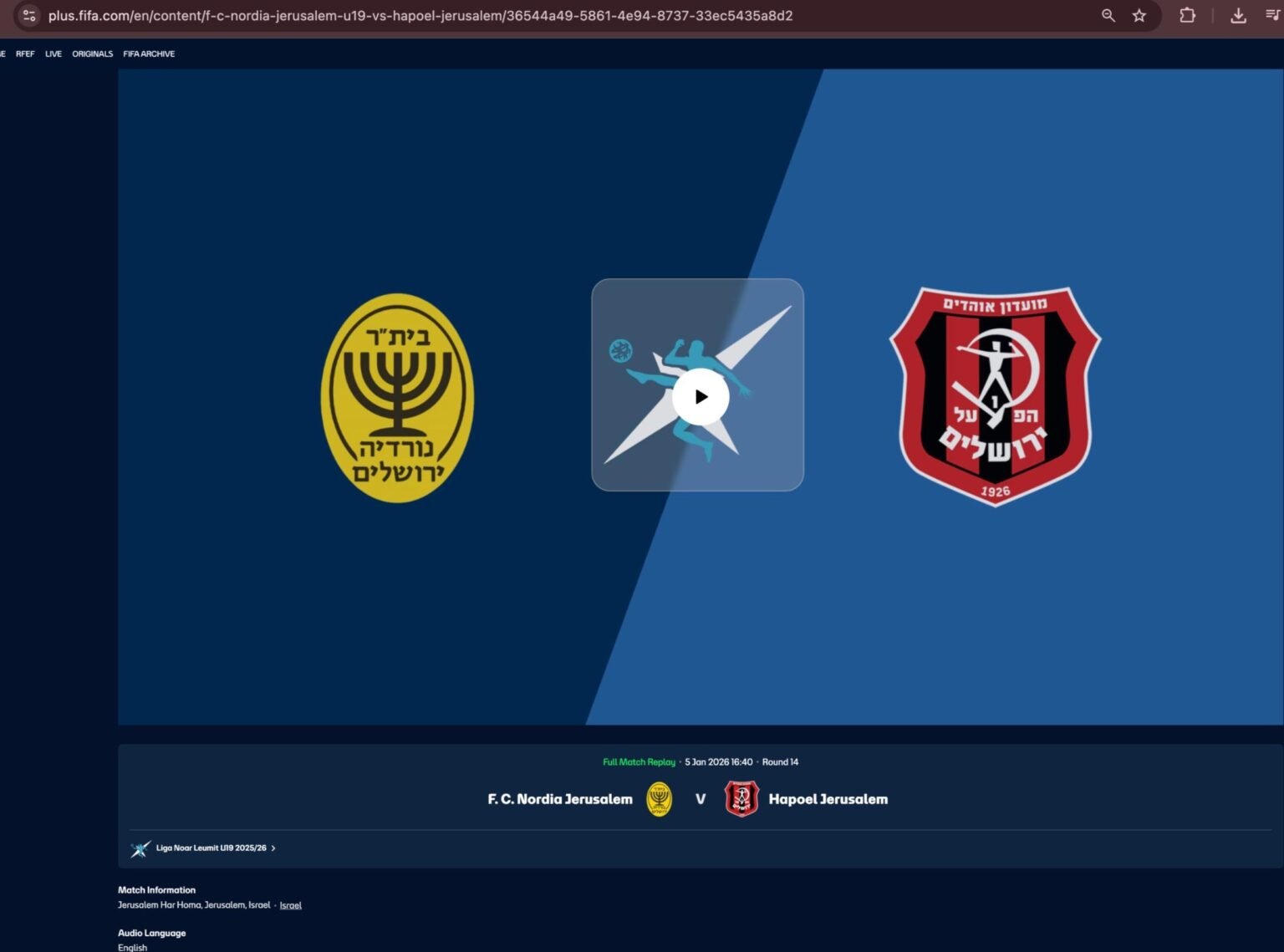
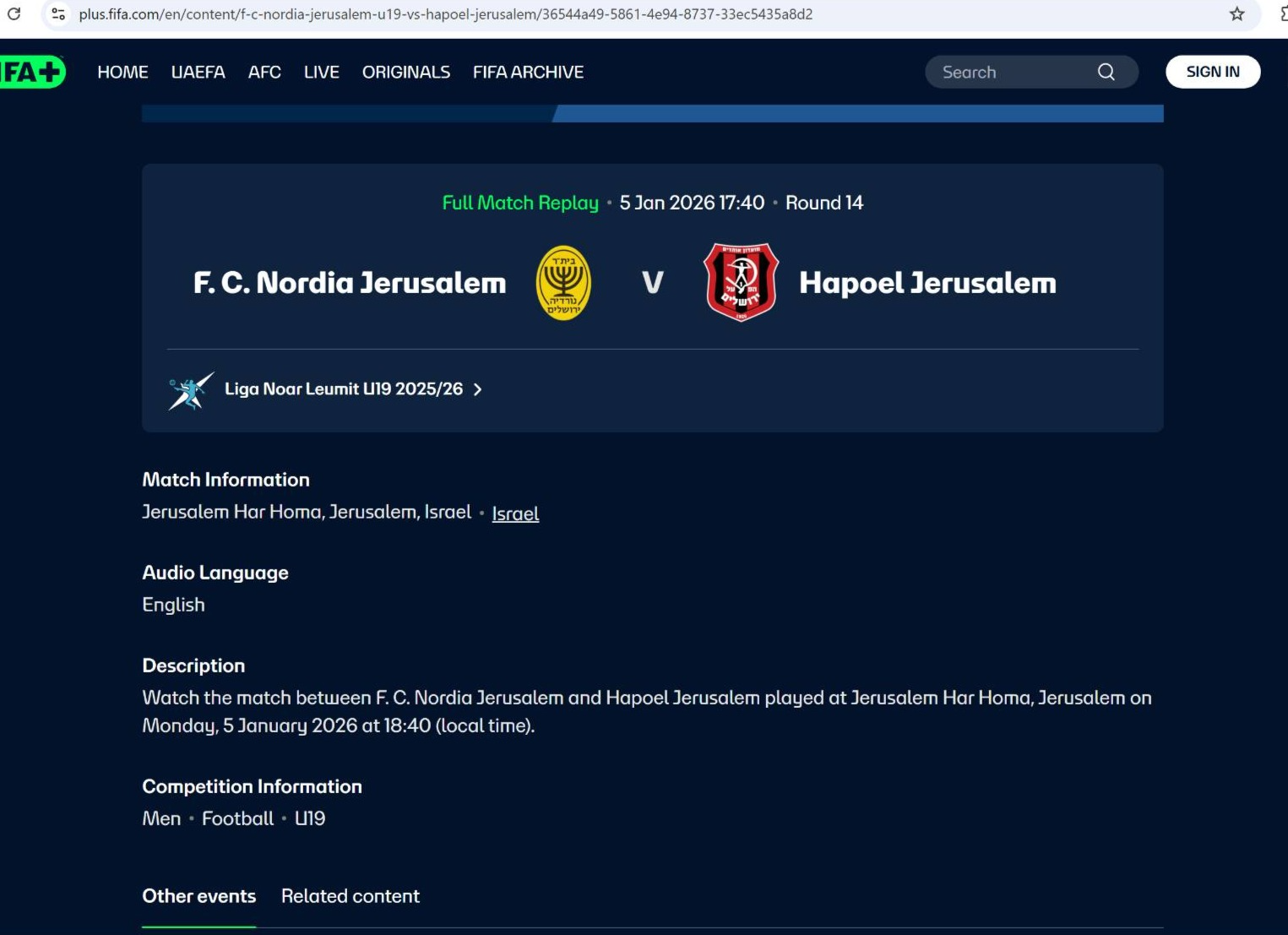
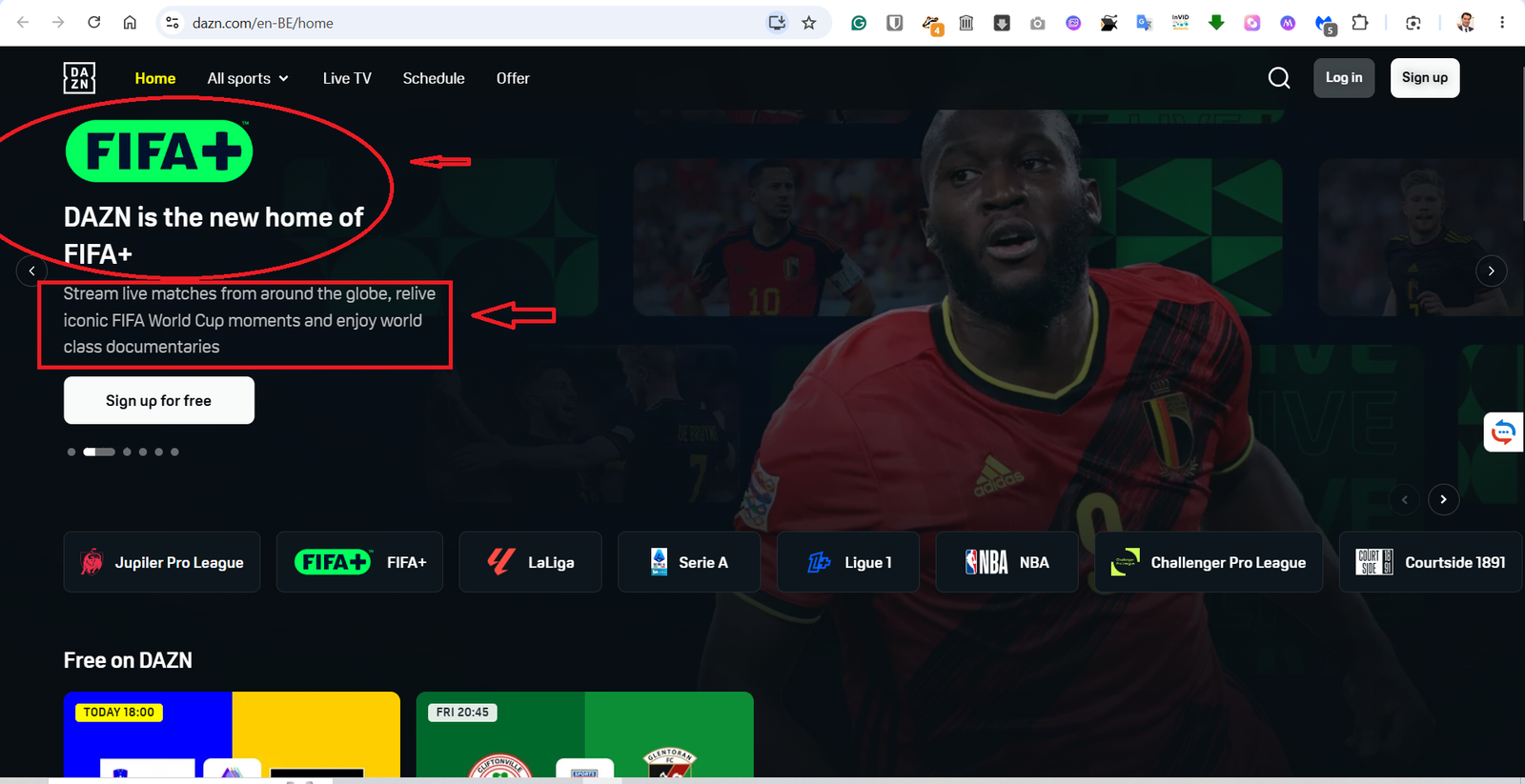
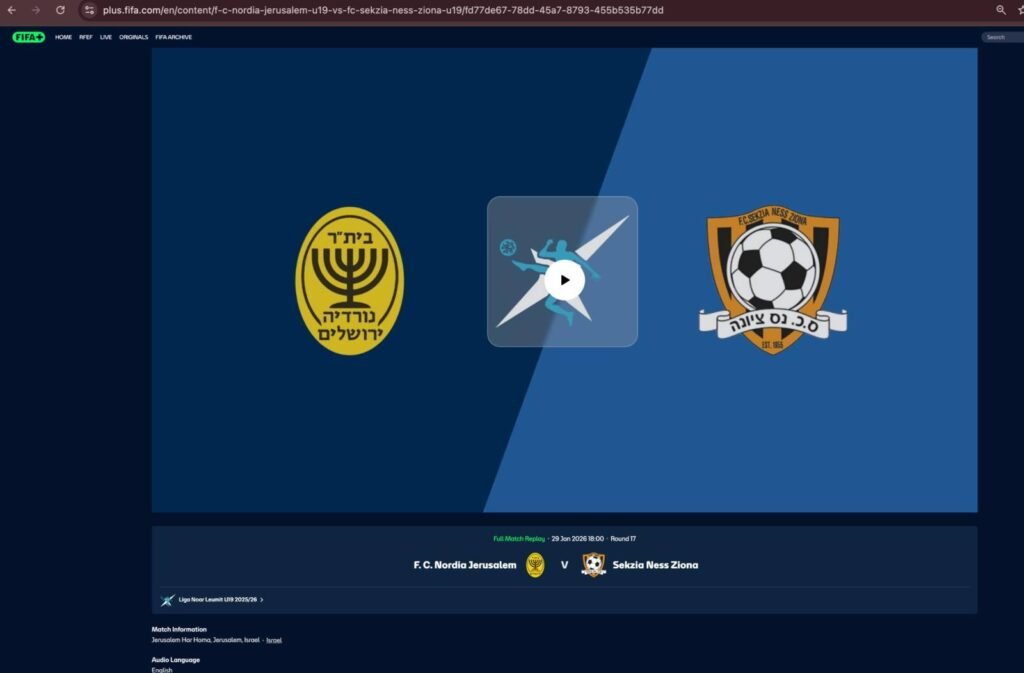
The two platforms appear to have a close relationship; DAZN says that it provides FIFA+ content to watch on demand. It also describes itself as “the new home of FIFA+”.
As stated in the ‘Beyond the ‘Green Line’ report, FIFA+ generates revenue through advertising and sponsorship, as well as by commercial expansion and increasing its audience base. Matches broadcast by FIFA+, including those involving clubs linked to settlements, may therefore be bringing in revenue to FIFA, which in turn provides a platform for showcasing these clubs and their players.
FIFA’s budgets consolidate financial data in a way that makes it difficult to track revenue generated by its digital platforms. Revenue from digital broadcasting is consolidated within the financial items in the federation’s overall budget, which stands at nearly 13 billion dollars for the current financial cycle (2023–2026).
The budget shows that television broadcasting revenue alone amounted to $3.925 billion from matches in 2026.
Offside in Har Homa
The Har Homa ground, where the matches broadcast on FIFA+ were played, is in the Homat Shmuel neighbourhood beyond the Green Line – the 1948 border – and sits on land Israel took over after the 1967 war.
The Har Homa neighbourhood, which used to be called Jabal Abu Ghneim, is in East Jerusalem and is part of the Palestinian territories occupied by Israel in 1967. Both the settlement and the facilities built there are therefore illegal under international law.
Jerusalem FC is one of the clubs that plays its games at the Har Homa ground, from where FIFA+ has broadcast several matches. The club was founded in 2019 by billionaire French-Israeli Laurent Lévy, owner of the Optical Centre group. This is one of the world’s largest chains of opticians and hearing aid providers, with hundreds of branches across Europe, Canada and Israel.
Human rights groups and the media have referred to Lévy as an “extreme Zionist” who espouses the vision of a “Greater Israel”, which denies the Palestinians’ right to exist.
During the war on Gaza, Lévy, being the sole owner of Optical Centre, sent glasses and contact lenses free of charge to Israeli army soldiers in Gaza.
Members of the European and French parliaments belonging to the “La France Insoumise” [France Unbowed] party have accused the company of directly supporting Israeli military operations by supplying soldiers with optical equipment.
Playing Outside the Rules
In March 2026, FIFA’s Disciplinary Committee ruled on a complaint submitted by the Palestinian Football Association during the 74th FIFA Congress, held in May 2024, objecting to the participation of settlement clubs in the Israeli league.
The ruling included a refusal to take any action against settlement clubs, because of what it called “the unresolved legal status of the West Bank under public international law”.
Conversely, the disciplinary committee fined the Israeli Football Association 150,000 Swiss francs (US$190,000), for “committing grave and systematic abuses relating to discrimination and racism; tolerance of politicised and militaristic messages; and exclusion of Palestinians from sports infrastructure in the West Bank.”
“Member associations and their clubs may not play on the territory of another member association without the latter’s approval” (article 64(2). of the FIFA Statutes)
Steve Cockburn, Head of Economic and Social Justice at Amnesty International, described FIFA’s announcement that it would take no action against clubs based in Israeli settlements as “a failure to enforce FIFA’s own rules. The decision is also a flagrant violation of international law. FIFA had a clear opportunity to both defend the rights of Palestinians and uphold international law. But by taking this decision, it has shamefully chosen to abandon both.”
“The International Court of Justice has stated quite clearly that Israel’s occupation of Palestinian territory is unlawful, and that settlements in the occupied Palestinian territory are illegal,” Cokburn adds.
Amnesty International also wrote to both FIFA and UEFA on October 1, 2025, calling on them to suspend the Israeli Football Association from their competitions until clubs based in illegal settlements on occupied Palestinian land are barred from the Israeli football leagues.
Amnesty International letter to FIFA and UEFA presidents
Omar Shaker, who handled the Occupied Territories and Israel at Human Rights Watch before resigning in February, said: “Some of the land on which these stadiums are built is owned by families of players who can’t get into them or play there.”
Shaker pointed out that FIFA’s regulations are clear: “You cannot play matches on the territory of any member state without obtaining its explicit permission.”
Sajed Karakra, coach of the Palestinian Under-20 national team, sees the participation of settlement clubs in the Israeli league as part of a wider policy. “The participation of these sports teams is aimed at strengthening and supporting settlements,” he says.
By contrast, Karakra condemns the complete paralysis of the sports system in the West Bank. He says the contrast between the state of the game before and after 7 October 2023 points to an undeclared strategy to undermine local football and deprive Palestinian players of the physical and technical preparation they need.
Karakra says that before the war, and despite restrictions imposed by the occupier, between 70 and 80 percent of regular sporting activity went ahead, and the Palestinian Football Association successfully ran a regular league under the auspices of the Asian and international federations.
From a Lucky Ticket to a Settlement Project
This issue is not limited to football. Our investigation found that sports infrastructure as a whole had expanded in the settlements as a result of projects supported by “Mifal HaPais” (the Israeli National Lottery).
The board of directors of Mifal HaPais includes key figures directly or indirectly linked to the settlement project. They include mayors, the Likud Party leadership, and members of settlement councils.
The most prominent is Itzik Larry, the current chairman of Mifal HaPais and former chief executive of Toto, the body that handles sports betting in Israel.
Other prominent figures involved in the management of Mifal HaPais include Haim Bibas, the mayor of Modiin-Maccabim-Re’ut, and Benjamin Biton [mayor of Dimona].
Mifal HaPais declares openly that it is owned by local authorities. The governance page on its website states that figures from local government hold positions within its management structure, and that the mayor of Ma’ale Adumim, Benny Kashriel, was a member of its board of directors.
Data published on the foundation’s website shows that about 46 percent of lottery profits go directly to local authorities, with no distinction made between those in Israel and those in settlements. Mifal HaPais also invests 51 percent of its profits in building and developing sports facilities.
One of the most important projects funded by Mifal HaPais was the opening of the Sababa Sports Centre in the settlement of Efrat. The centre includes a virtually Olympic-size swimming pool, partly funded by the lottery.
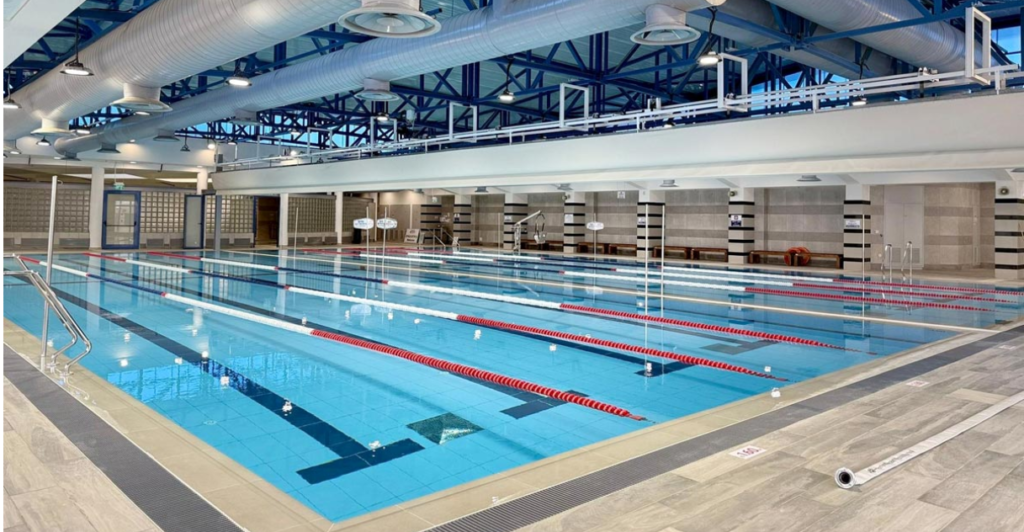
According to the official announcement by Mifal HaPais, the centre was opened on 14 January 2026, as part of an explicit partnership with the Efrat Settlement Council.
Official data show that the project received 15.7 million shekels (US$5.234 million) in direct investment from Mifal HaPais for sports infrastructure. An additional three million shekels (US$1 million approx.) came in a grant earmarked to cover the deficit and to support operations, according to the minutes of the Efrat council for February 2026.
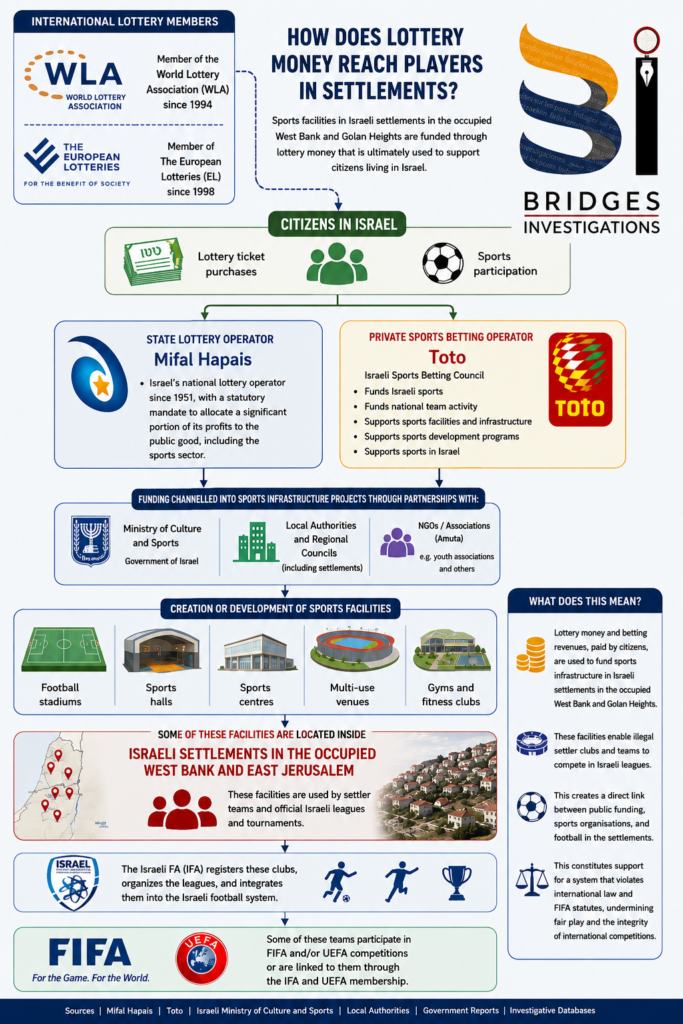
The Sababa Sports Centre in Efrat is more than a local leisure facility; it has become a strategic link between settlement activities and international organisations. The Israeli lottery is a member of the European and International lotteries, which makes it bound by international standards.
European and International Funding
Sports clubs in the settlements participate in the Israeli league, though their official addresses show that they are situated in occupied Palestinian territory. The Israel Football Association, as a member of FIFA and UEFA, nevertheless continues to receive funding from both organisations to develop the game.
Human Rights Watch reported in 2016 that the financial records of FIFA and UEFA show that they had, in recent years, transferred millions of shekels annually to the Israel Football Association. This was part of a reciprocal financial relationship, under which FIFA and UEFA received revenue from regional and international matches involving Israeli teams.
The report states that, by allowing the Israel Football Association to hold matches within Israeli settlements, FIFA is engaging in commercial activity that supports those settlements, and that this is at odds with the human rights commitments it had recently reaffirmed.
According to a report by Amnesty International in March 2026, both FIFA and UEFA provided funding to the Israel Football Association, and this continued even after the 2023 war on Gaza.
The Money: What Does UEFA Fund?
The HatTrick programme is one of the most important support schemes from which the Israel Football Association has benefited. It redistributes more than half the net revenues from the European football championships to national associations that are members, to support the development of the game at different levels.
The funding is divided into three streams: Investment funding, which is given as a one-off grant of up to five million euros to each association for strategic projects; annual solidarity payments of around one million euros per year to cover the national association’s operating costs; and other annual incentives of up to two million euros a year to encourage implementation of UEFA programmes in several areas. These include developing women’s sports programmes and training; expanding the number of referees; and youth and governance programmes.
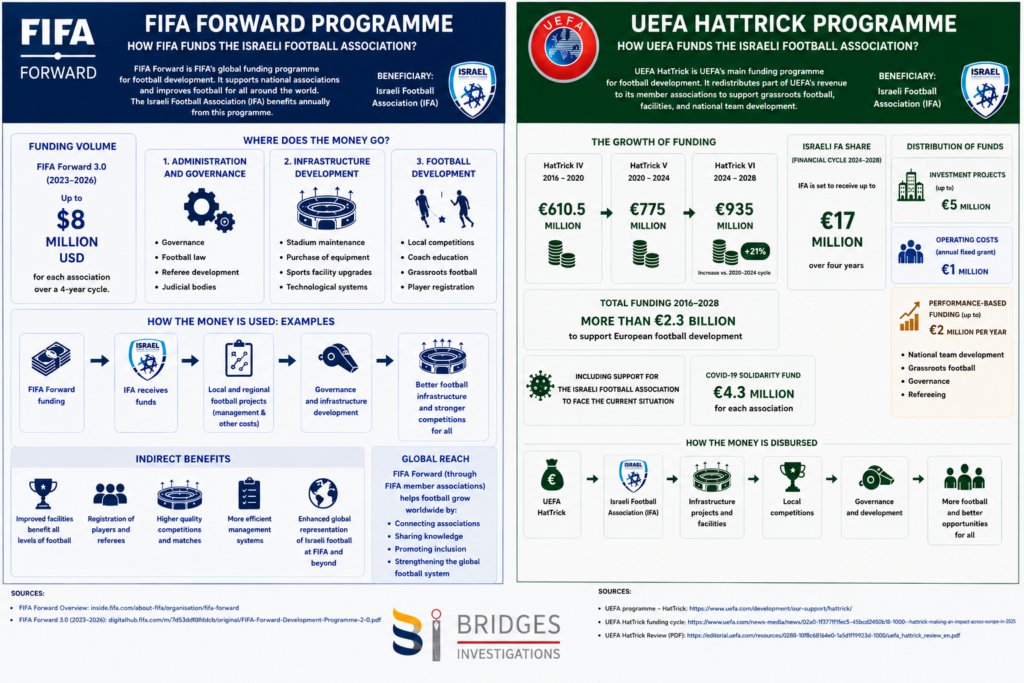
Funds are not paid directly to clubs or local projects, but to national member associations – like the Israel Football Association – to cover sporting projects.
In recent years, this financing has helped to modernise 60 percent of national football stadiums in Europe and has paid for over 1,000 football pitches and 3,000 mini-pitches. It has also supported hundreds of women’s football development projects and youth training networks.
UEFA’s allocations and funding to the Israeli Football Association under the Hat-Trick programme between 2024 and 2028 totalled 17 million euros (US$17.3 million) – a 21 percent increase on the previous funding cycle. Each national association that is a member of UEFA receives the same amount.
In terms of direct funding, the UEFA Foundation for Children, chaired by UEFA President Aleksander Čeferin, financed the Neighbourhood League project, which is implemented either by the Hapoel Katamon Jerusalem club or its supporters’ association, Katamon Madunim Ohadim.
According to the website of the UEFA Foundation of Children, it gave around 320,000 euros (US$370,000 approx.) to the Neighbourhood League project between 2020 and 2023. At the same time, Hapoel matches were being held in Israeli settlements until 2025, and the association that received the funding is registered at an address in the Har Adar settlement.
From Ma’ale Adumim to Madrid
The issue extends beyond European funding; UEFA member associations have previously collaborated with settlement clubs. In March 2023, Osnat Kaduri, manager of Beitar Ma’ale Adumim club, which is based in the Ma’ale Adumim settlement in the occupied West Bank, joined a wider Israeli delegation of sports-club managers on a study visit to Madrid.
Contemporary reports show that the delegation visited LaLiga headquarters and Spanish clubs including Atlético Madrid, Getafe and Rayo Vallecano. Kaduri said La Liga representatives accompanied the delegation during the four-day visit.
Per the Scottish Sport for Palestine’s report ‘Beyond the ‘Green Line’, this visit shows a club that operates within an Israeli settlement being integrated into European football activities and institutions, even though it is based in territory considered occupied under international law.
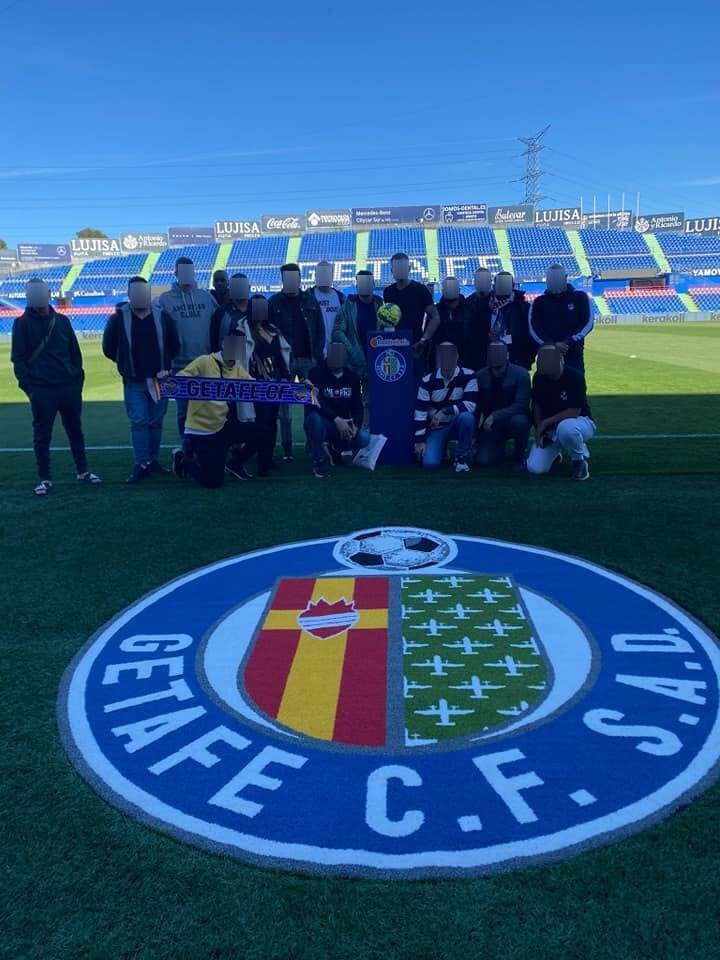
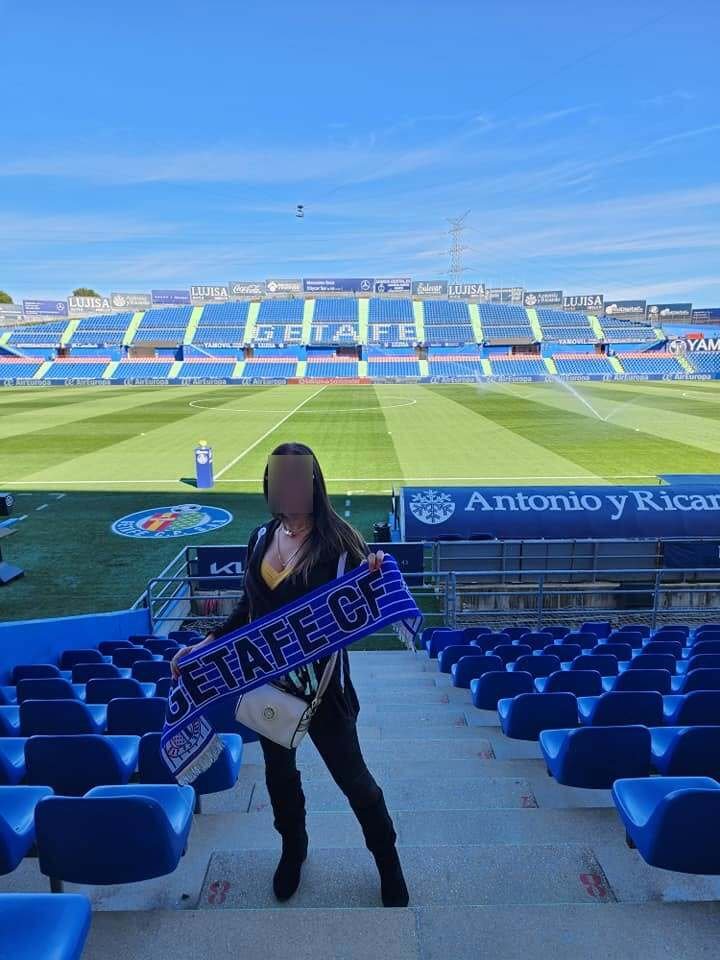
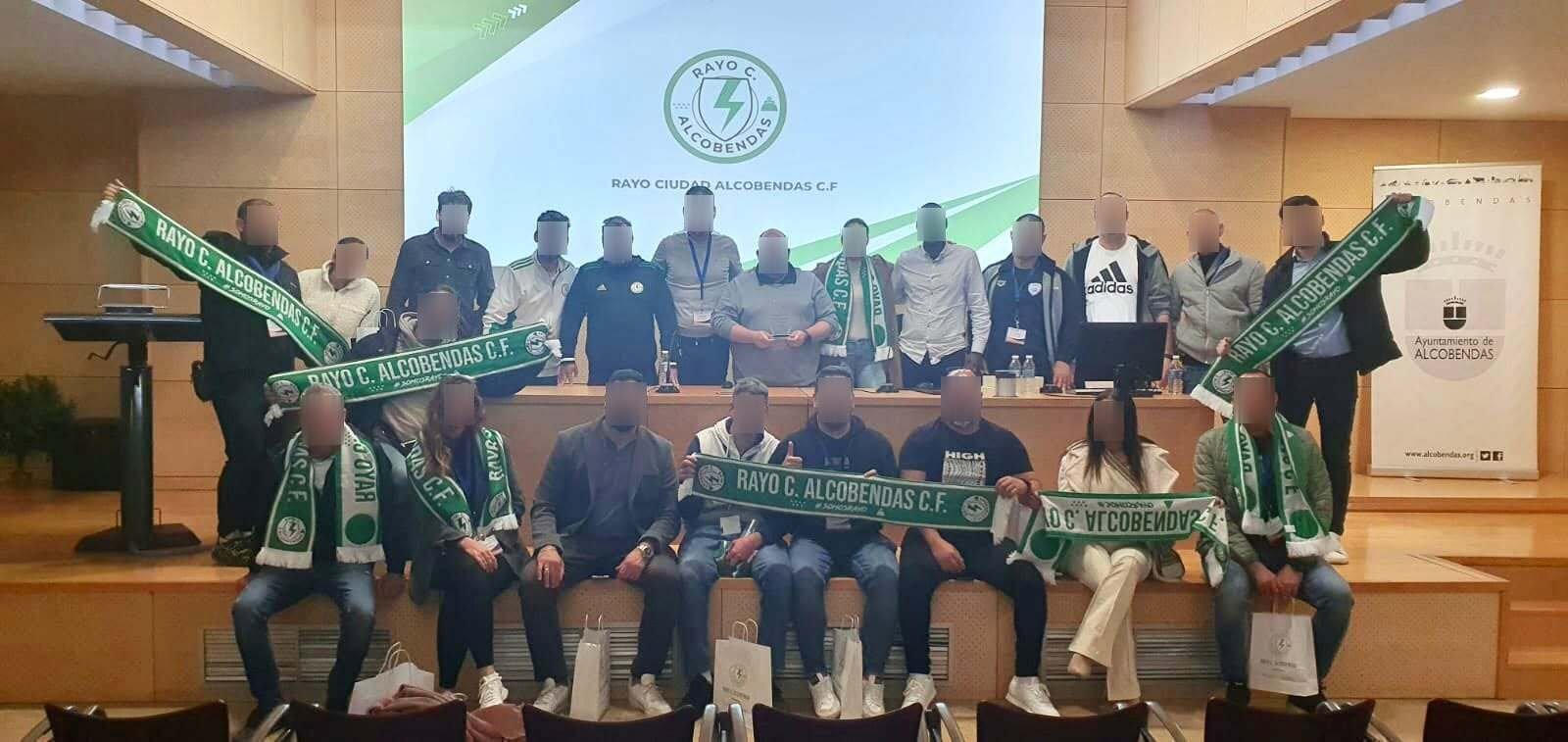
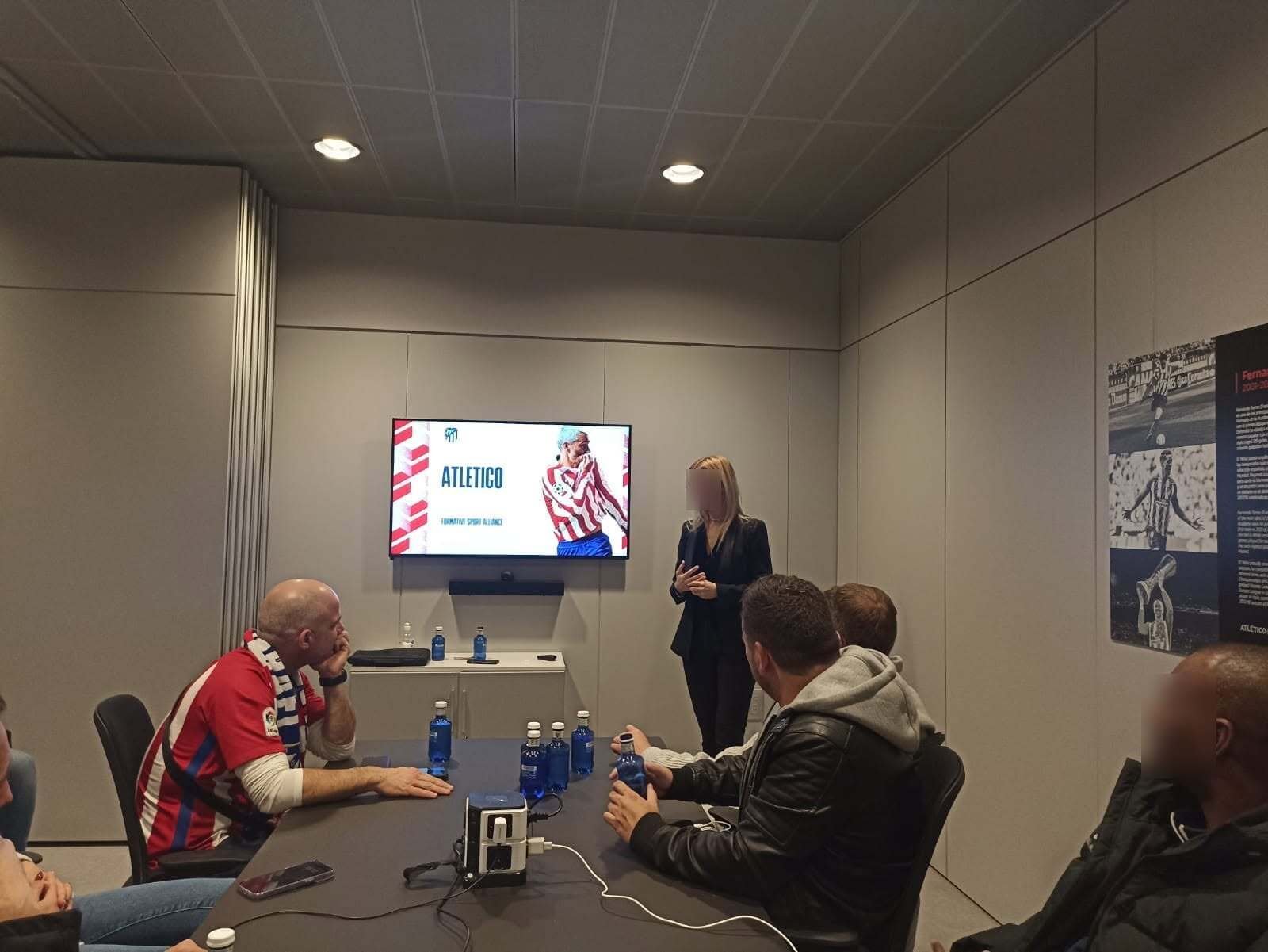
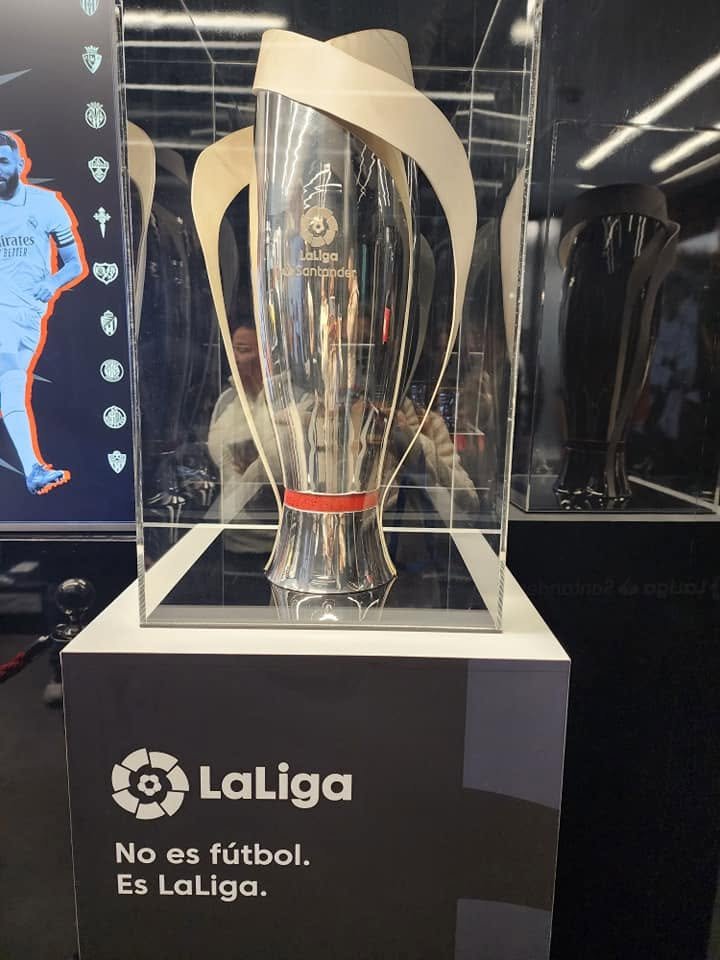
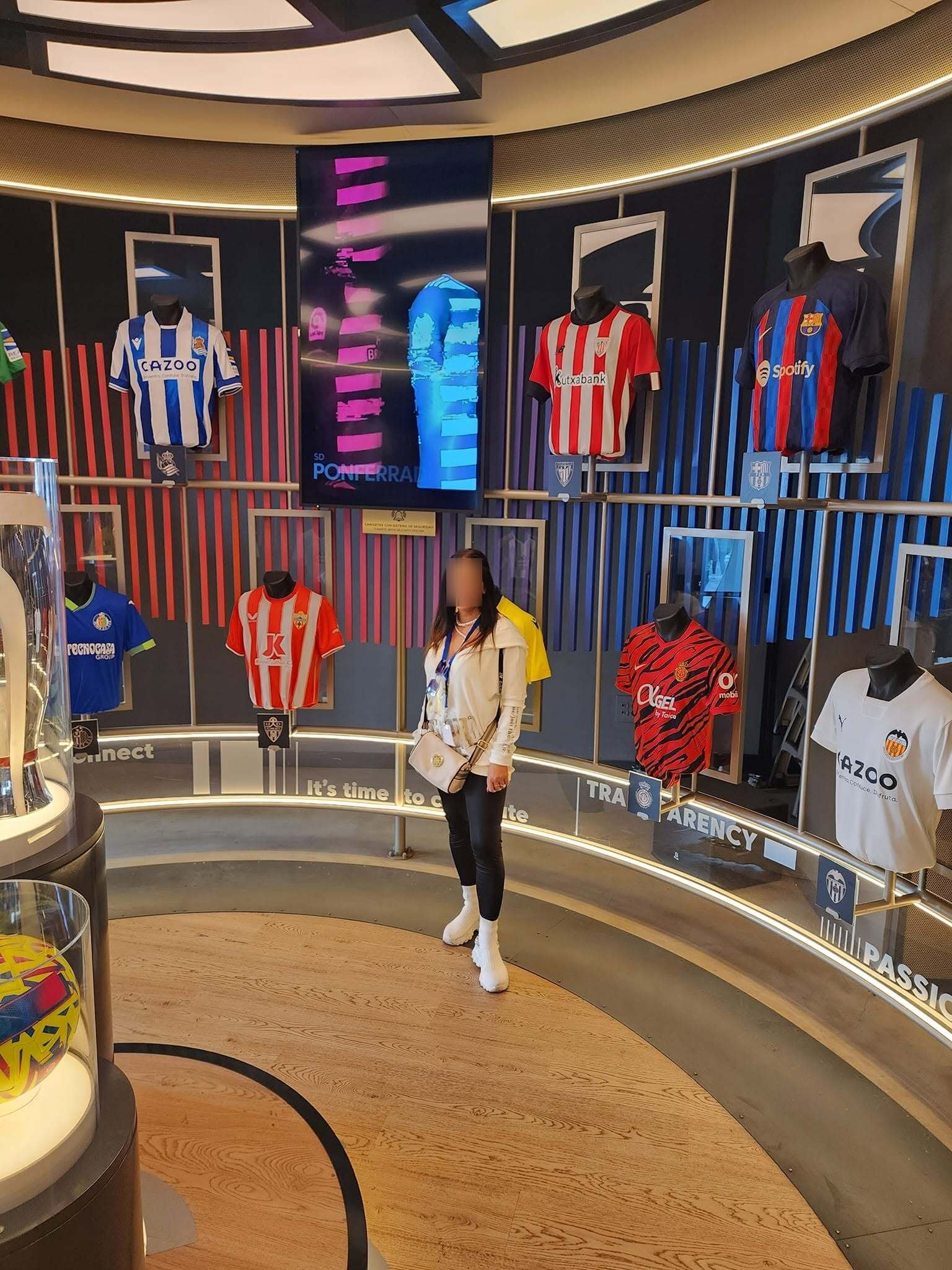
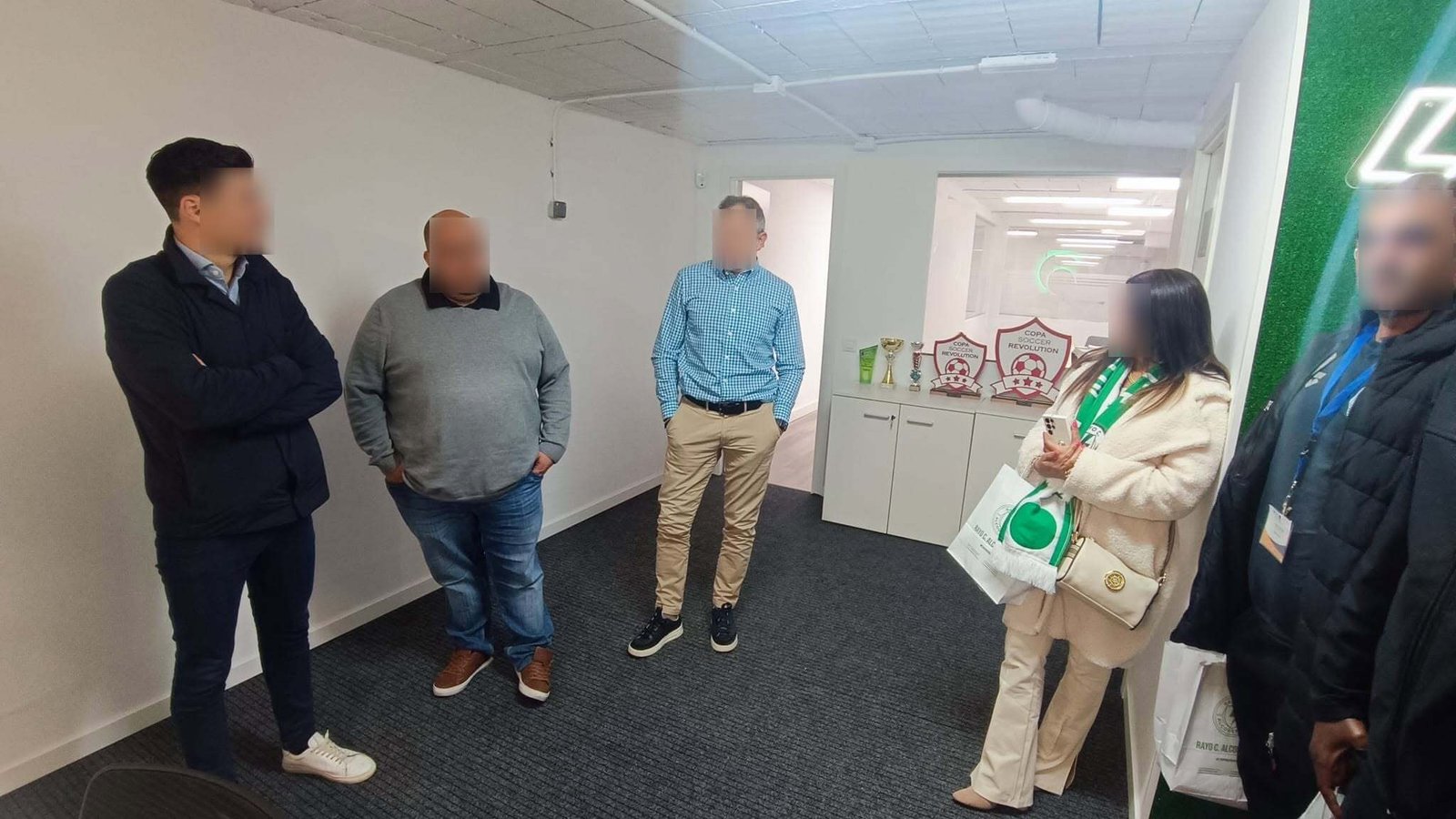
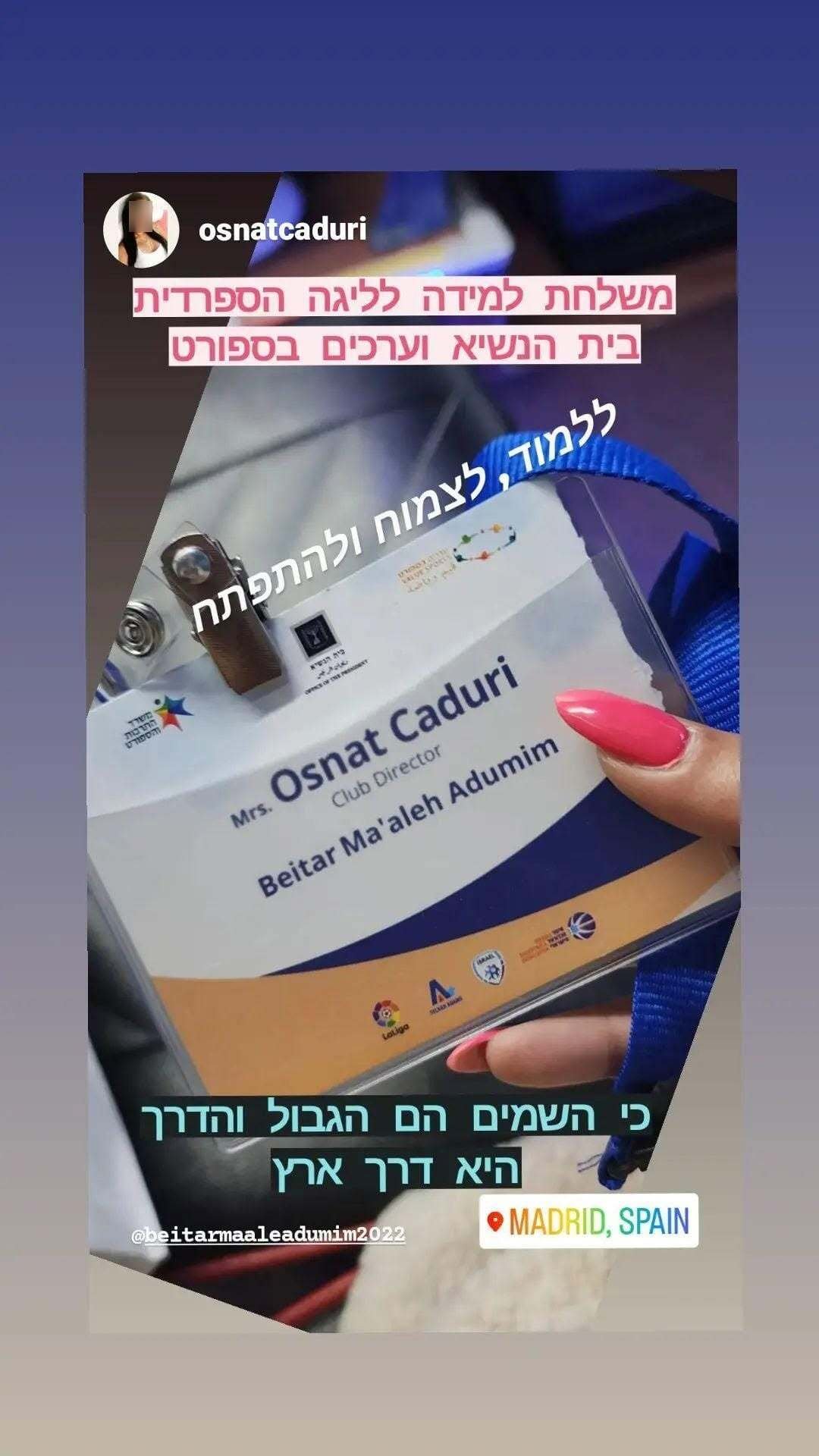
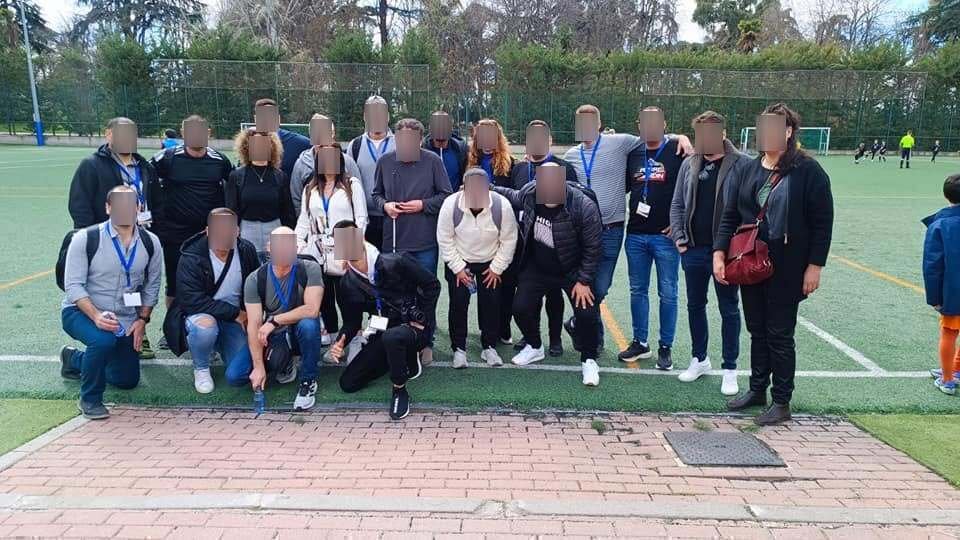
Photos of the visit. [Facebook/fair use]
A Test of European Consistency
In contrast to the stance FIFA and UEFA have taken with regard to stadiums and clubs in Israeli settlements, the two organisations acted to suspend Russian clubs from competitions when Russia invaded Ukraine in 2022. Professor Michael Lynk, former UN Special Rapporteur on the situation of human rights in the Palestinian territories, describes this as “double standards,” and says: “There is no fundamental difference between Russia’s illegal invasion and Israel’s ongoing 58-year-long effort to occupy and annex the Palestinian territories.”
The Principle of “Non-Recognition” in International Law
In contrast to its support for football grounds and clubs in Israeli settlements, the European Commission is clear that these settlements are illegal under international law and constitute a major obstacle to peace and to the two-state solution.
EU member states are committed to not recognising any changes to the 1967 borders, including in Jerusalem, and to ensuring that their bilateral agreements with Israel do not apply to the settlements.
Professor Lynk maintains that “the building of Israeli settlements in the occupied territories constitutes a war crime.”
This conclusion, he points out, is based on the 1998 Rome Statute, signed by 125 states, and on repeated resolutions issued by the UN Security Council, General Assembly and Human Rights Council.
Consequently, Lynk says that football clubs in these settlements “are an extension of this practice, which is illegal under international law and even under FIFA’s own regulations.”
Debates in the Irish Parliament show that political and legislative pressure is mounting to hold international sporting bodies to account for their funding of the Israeli Football Association. At the parliamentary session on 9 June 2026, there were intense debates and questions put to the government.
Irish MPs called for Israel to be suspended from international sporting organisations because of its continued violations and the location of at least ten Israeli clubs in the occupied Palestinian territories.
One of the main arguments put forward by international sporting bodies is that “sport must remain separate from politics”. Professor Lynk categorically rejects this argument, saying: “Sport is big business”.
He says sport must adhere to international law: “To say that sport is separate from politics flies in the face of what’s happened in sport over the last 45 years.”
Dr. James Dorsey, a researcher in international football policy, also says separating sport from politics is a flawed principle, as they are “inseparable twins”.
Dr. Mark Doidge, a prominent academic and researcher in the sociology of sport, rejects the principle of neutrality that FIFA and UEFA repeatedly invoke when faced with political issues. “Neutrality is never neutral. It always goes along with the powerful,” he says.
Expansion Continues
Sports facilities in the settlements continue to expand. In a further example of its policy of annexation and expansion, the Israeli government approved, between December 2025 and February 2026, construction of a corridor linking the Ma’ale Adumim settlement to East Jerusalem. This area is home to three settlement clubs affiliated with the Israel Football Association: Beitar Ma’ale Adumim, Beitar Givat Ze’ev, and Ironi Yehuda.
The plan reflects a political position expressed by Prime Minister Benjamin Netanyahu, who has said that the expansion of Ma’ale Adumim reinforces his conviction that “there will never be a Palestinian state”.
Mahdi Al-Assi, the goalkeeper on the Palestinian national team, says he is trying as hard as he can not to let these problems get him down, and to keep up his daily training routine: “I try to train, and I push myself, despite the circumstances,” and adds, “They can’t easily stand in our way.”
From the stands, all football pitches may look the same: grass, two goals and white lines. But our story shows that where the pitch is located is no mere detail.
Behind every match lies a series of decisions: who allowed the club to be registered? Who financed the facility? Who organised the competition? Who published the result or broadcast the game? And who chose not to ask where the game was played?
This investigation was produced in partnership between ARIJ and Bridges Investigations.
Editor’s note: This investigation is based on original field reporting, interviews, and primary data verification conducted by Middle East Eye, ARIJ, and Bridges Investigations. Select background details also draw on prior research published by Scottish Sport for Palestine in its report, Beyond the ‘Green Line’: Israeli Settlement Clubs in Occupied Palestine.